Story: Huong Quynh
Photos: Nguyen Thi Minh Hai
Discover an ancient village with one of the most distinctive festivals in the Doai region.
“Dam boat racing, Gia procession, Thay festival” – this folk verse has long been etched in the consciousness of the Doai region, highlighting the area’s most distinctive and grand celebrations. Among them, the festival in Gia Village (formerly in Hoai Duc District, now part of Duong Hoa Commune, Hanoi) remains a cultural focal point, linking a heroic past with the rhythm of modern life.
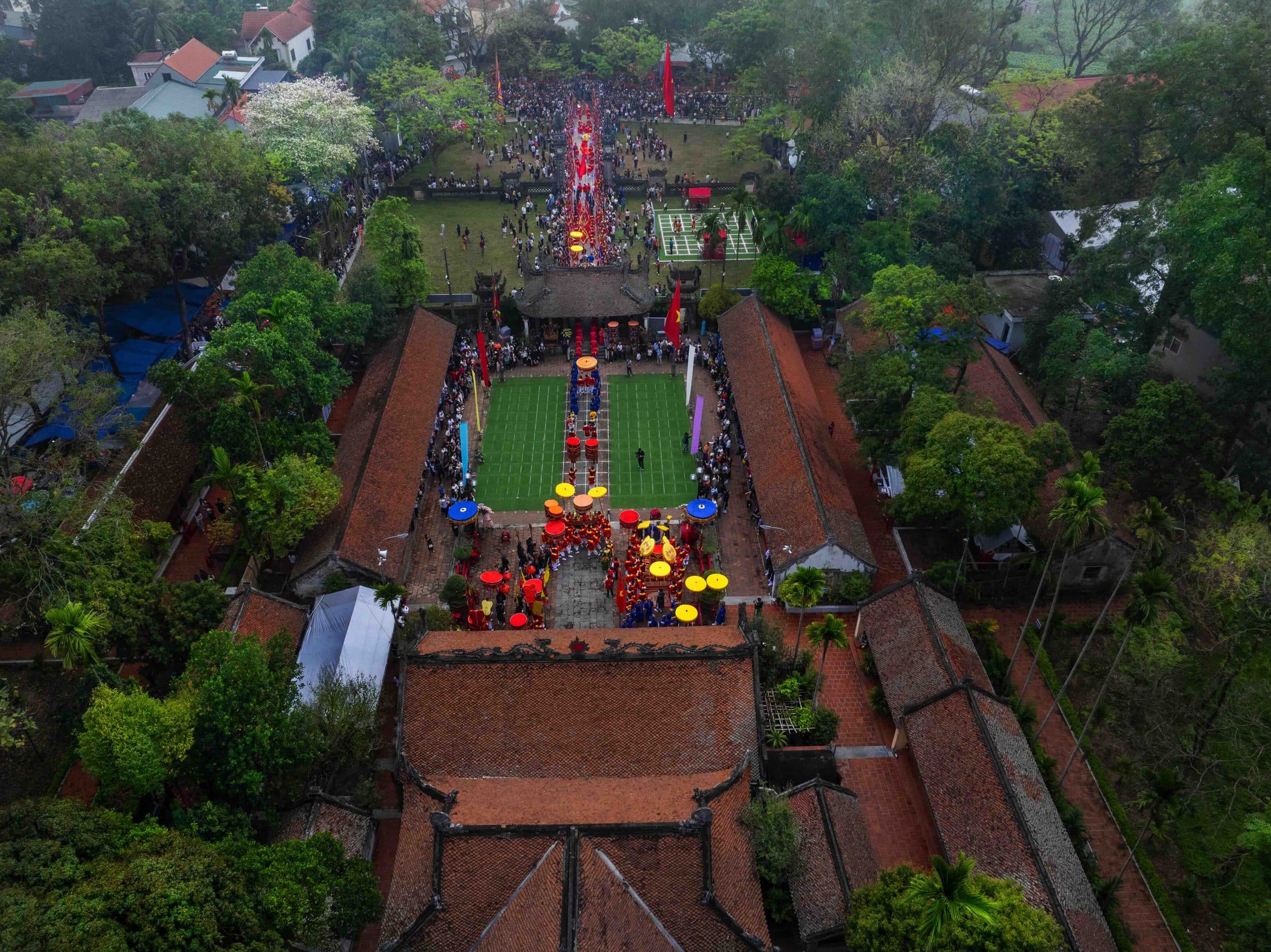
The heritage lineage of Gia Village begins with the story of a general of the Pham family, a distinguished son born on this land, who was later granted the royal surname by King Ly Nam De and given the name Ly Phuc Man. He left an enduring mark through his contributions to the early cause of nation-building and national defense. In remembrance of his merits, generations of Gia villagers have maintained the annual village festival as an expression of reverence, gratitude, and respect for their origins.
Alongside intangible cultural values such as customs, rituals, and festivals, the village has preserved an ancient system of wells, ancestral halls, and the architectural complex of Yen So Communal House, simply known to locals as Quan Gia. Together, these elements form a “living museum” and reflect the historical depth, cultural richness, and continuity of an ancient village.
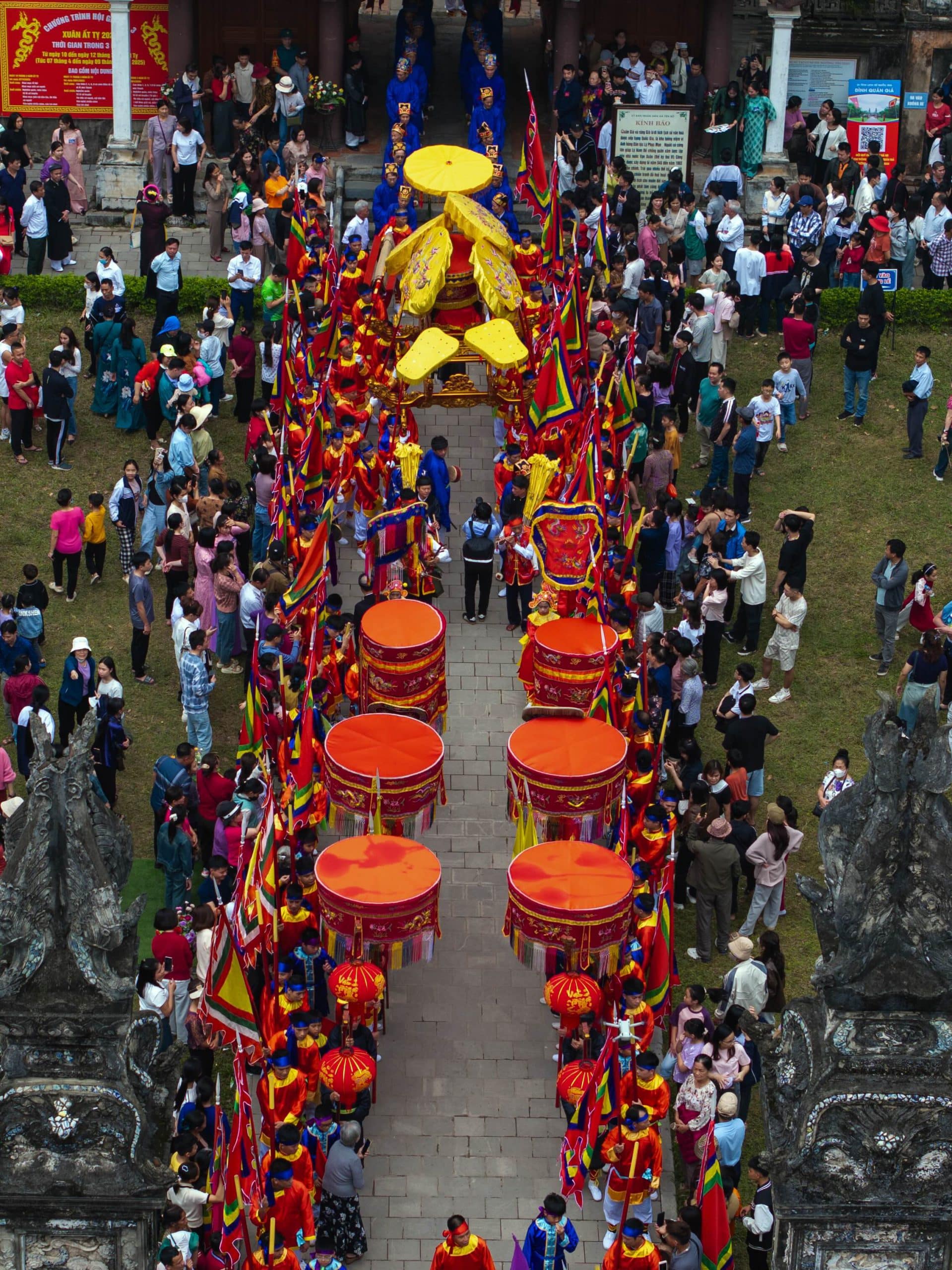
The annual Gia Village Festival opens on the 10th and lasts until the 12th day of the third lunar month, with the 10th as the main festival day. Every five years, the village hosts a grand celebration on a larger scale, attracting visitors from many places to worship and commemorate the merits of Saint Ly Phuc Man. Preparations for this major festival usually begin a full month in advance, carried out with care and dedication, and shared pride across the community.
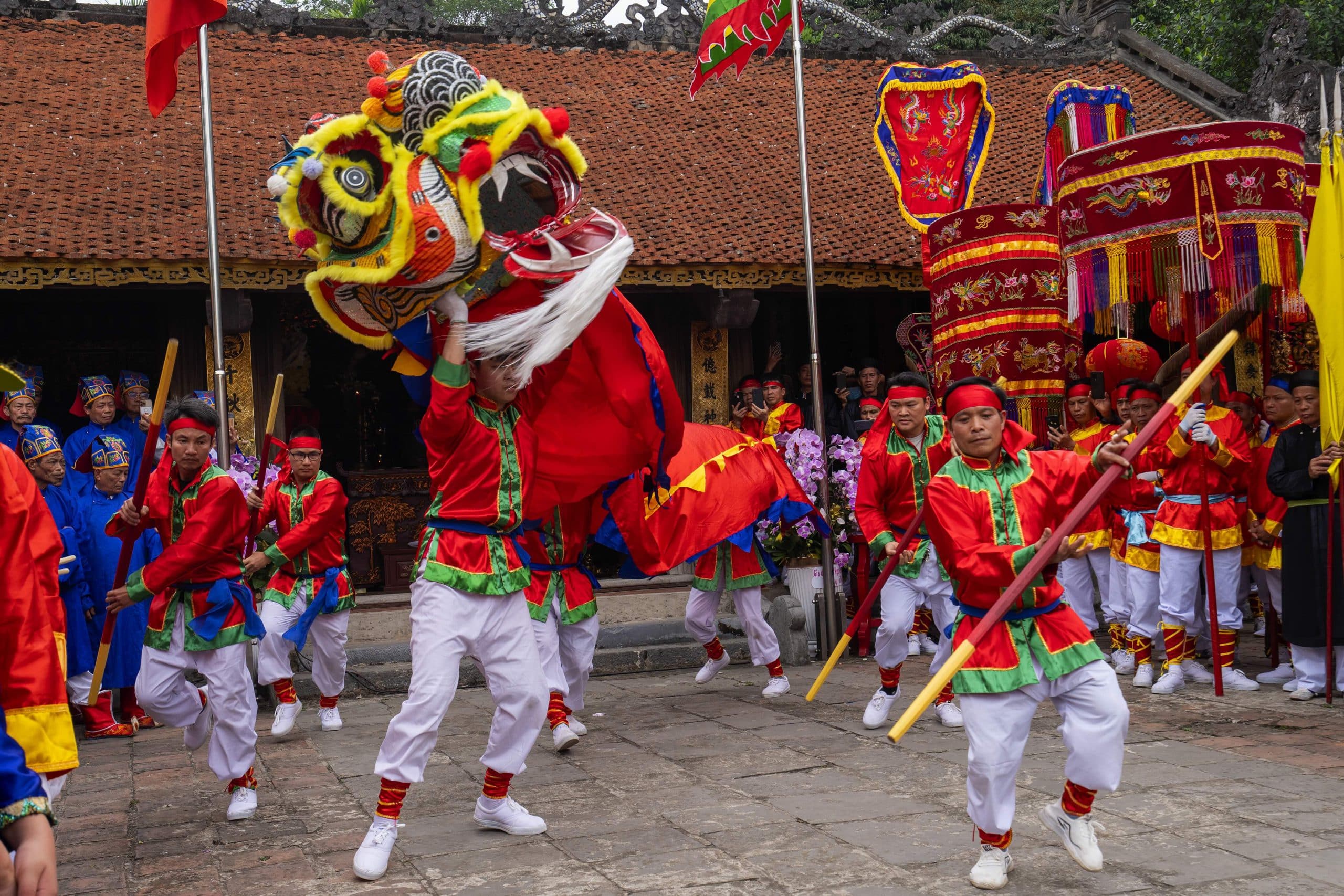
The soul of the festival lies in its traditional rituals, carried out with solemnity. From early morning on the main festival day, processions from surrounding villages converge at Quan Gia, creating an imposing scene of colorful banners and the resounding beat of war drums. After the incense-offering ceremony led by village elders and dignitaries, the atmosphere turns lively with flag dances and lion dances performed by the village’s young men.
The focal point of the festival is the nghiem quan ritual held in the afternoon – a dramatic reenactment of the historic battle in which General Ly Phuc Man assisted King Ly Nam De in founding the Van Xuan state. The ritual draws hundreds of strong young men from the village. To the urgent rhythm of pounding drums, the nghiem troops move from Quan Gia into the courtyard, forming concentric circles from the outside inward. The circles spin faster, accompanied by thunderous chants. More than a ritual, nghiem quan takes spectators back to the nation’s formative days, depicting the martial spirit and heroic momentum of the ancestors in this ancient heartland.
Alongside its solemn ceremonial rites, the Gia Village Festival has a festive side full of distinct local character. Villagers and visitors can take part in, or cheer on, traditional wrestling matches, human chess games, and a range of folk activities. By the wrestling arena, quick drum beats blend with the cheers of crowds encircling the ring. Traditional cheo performances are staged in the communal house’s courtyard, exposing visitors to the folk performing arts of Xu Doai.
For the people of Gia Village, the festival is not only a time to honor ancestral merits, but also an occasion to reflect on the values that have sustained village life across generations. In modern society, these cultural practices play a vital role in preserving traditional identity, while also laying the foundation for Gia Village to emerge as a spiritual tourism destination on the outskirts of Hanoi.