Story: Le Anh
Photos: Le Huy
The Nung An people are preserving their traditional paper-making craft.
Among Vietnam’s heritage of craft villages are those devoted to making paper. In the border region of Cao Bang, the Nung An people of Quang Uyen Commune continue to make giay ban – a type of traditional handmade paper. Using bark from forest trees, the process is entirely manual. Passed down through generations, this practice is closely tied to their spiritual life and vividly reflects local folk wisdom.
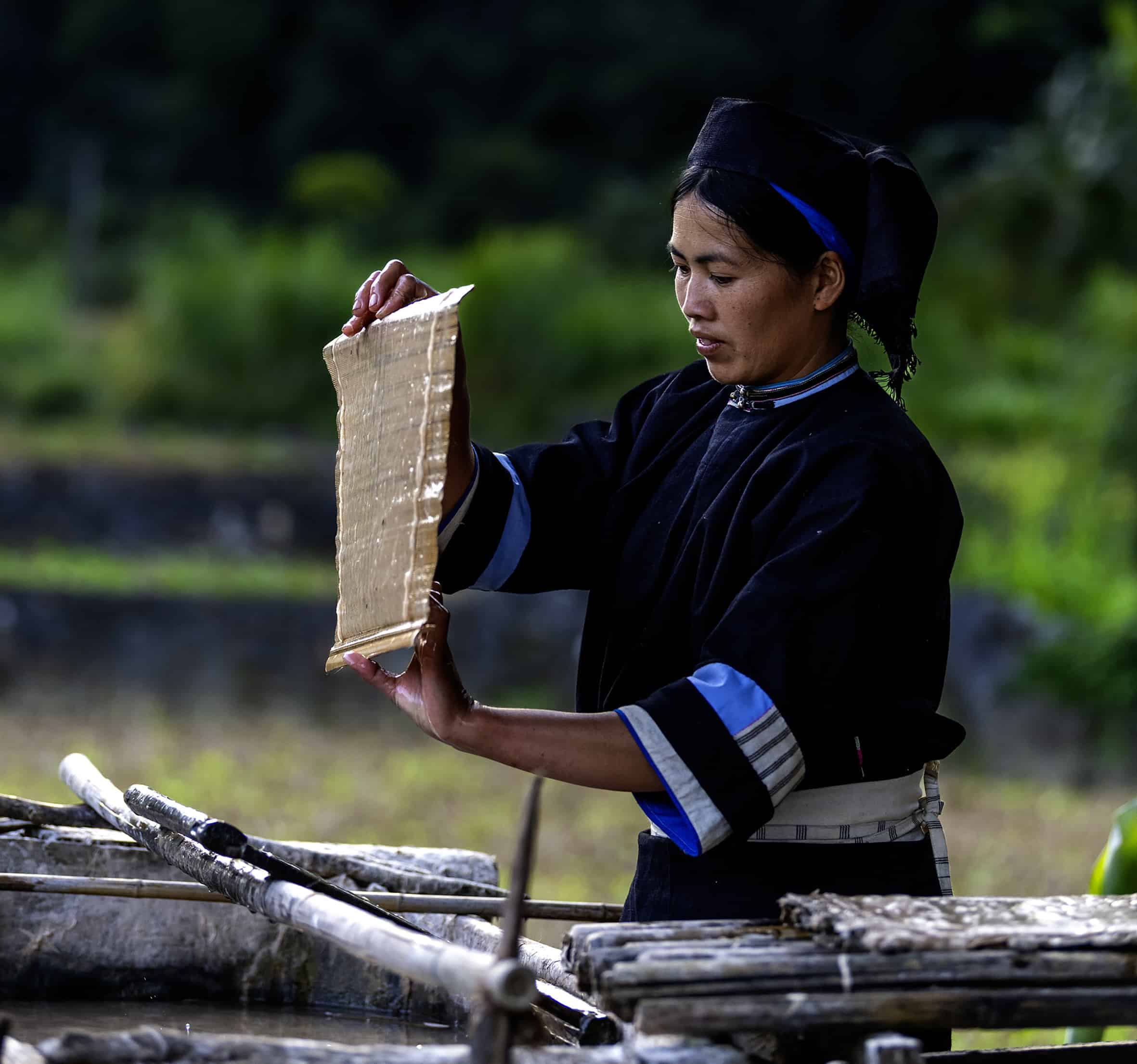
The Nung An take pride in preserving their simple indigo-dyed attire, a visible cultural marker worn for daily labor and on festive occasions. Beyond this rustic indigo hue, their cultural life is expressed through community activities that reflect their spiritual world. Ancestor worship rituals, folk beliefs, and life-cycle customs not only guide their spiritual life but also help shape many traditional crafts in this rocky mountainous region. Within this cultural current, the Nung An paper-making craft emerged and developed to serve both daily needs and religious practices.
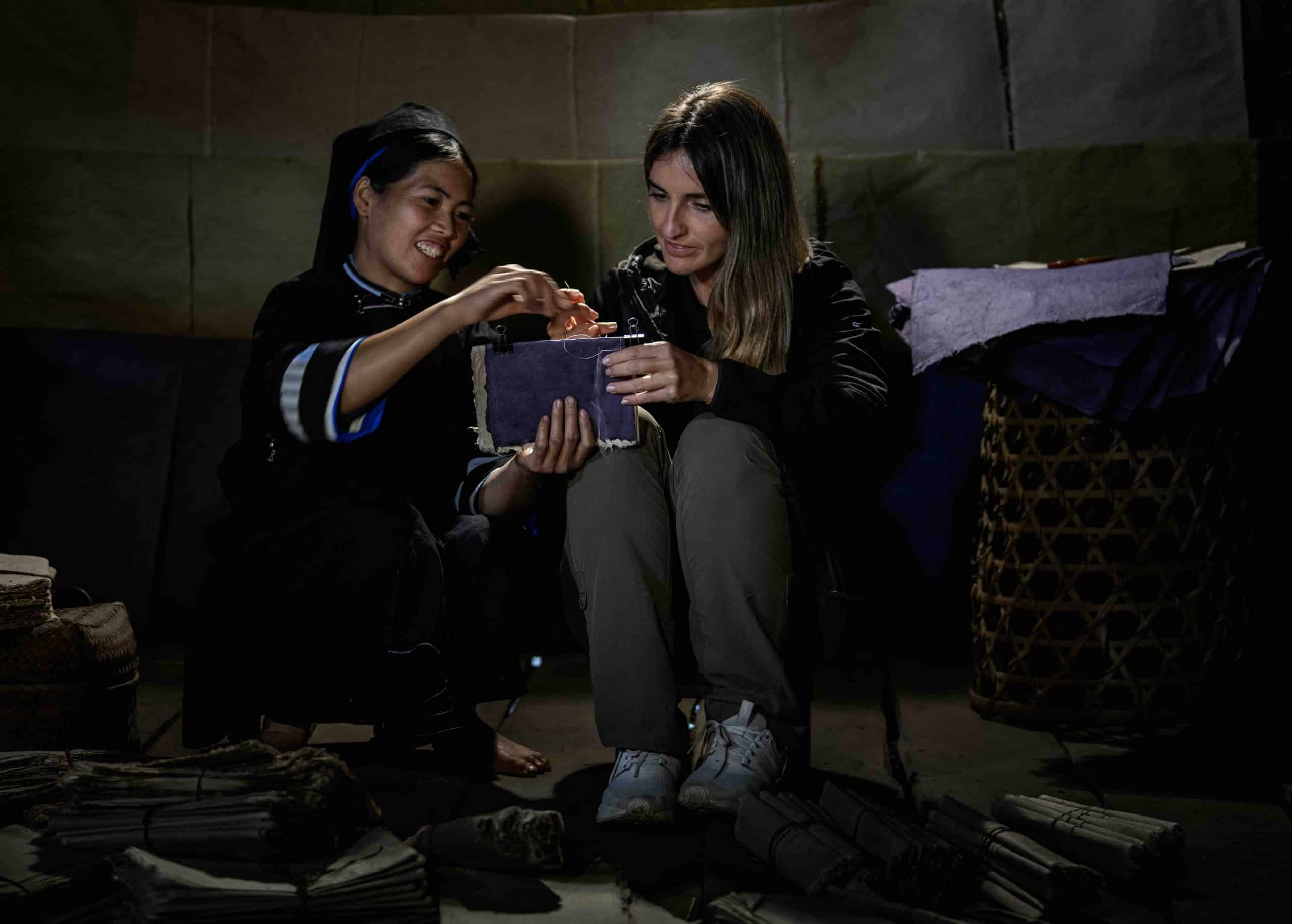
For centuries, these rustic sheets of paper were used in many significant Nung An rituals associated with ancestor worship, weddings, and life-cycle ceremonies. According to elders’ recollections, giay ban was once used to record and preserve poetry, ancient stories, and folk knowledge passed down through generations. There is a shared belief that paper made from forest bark and dried by the wind and sun serves as a bridge for communal rituals, being a product of both nature and human labor. Today, alongside that traditional role, giay ban is being turned into modern products such as notebooks, paintings, and paper fans, carrying the cultural story of the Nung An people to visitors.
In the past, nearly every family made paper to serve its own domestic and spiritual needs. Over time, as livelihoods and lifestyles have shifted, the number of households practicing the trade has gradually dwindled. Currently, in Quang Uyen Commune, around 40 households continue to produce giay ban using traditional methods, following their ancestors’ procedures. To create a sheet of durable and smooth paper, artisans must complete approximately 10 stages. Rather than use modern machinery and industrial chemicals, the artisans rely on natural raw materials and meticulous handiwork.
The primary material for making giay ban is the bark of the may sla (paper mulberry) tree, a forest species that yields smooth, durable paper. After harvesting, the bark is boiled for about two hours and allowed to cool before the dark outer layer is stripped away. Using only the white inner bark gives the paper a natural, bright color. If not used immediately, this bark is hung to dry and stored on a kitchen shelf for later use.
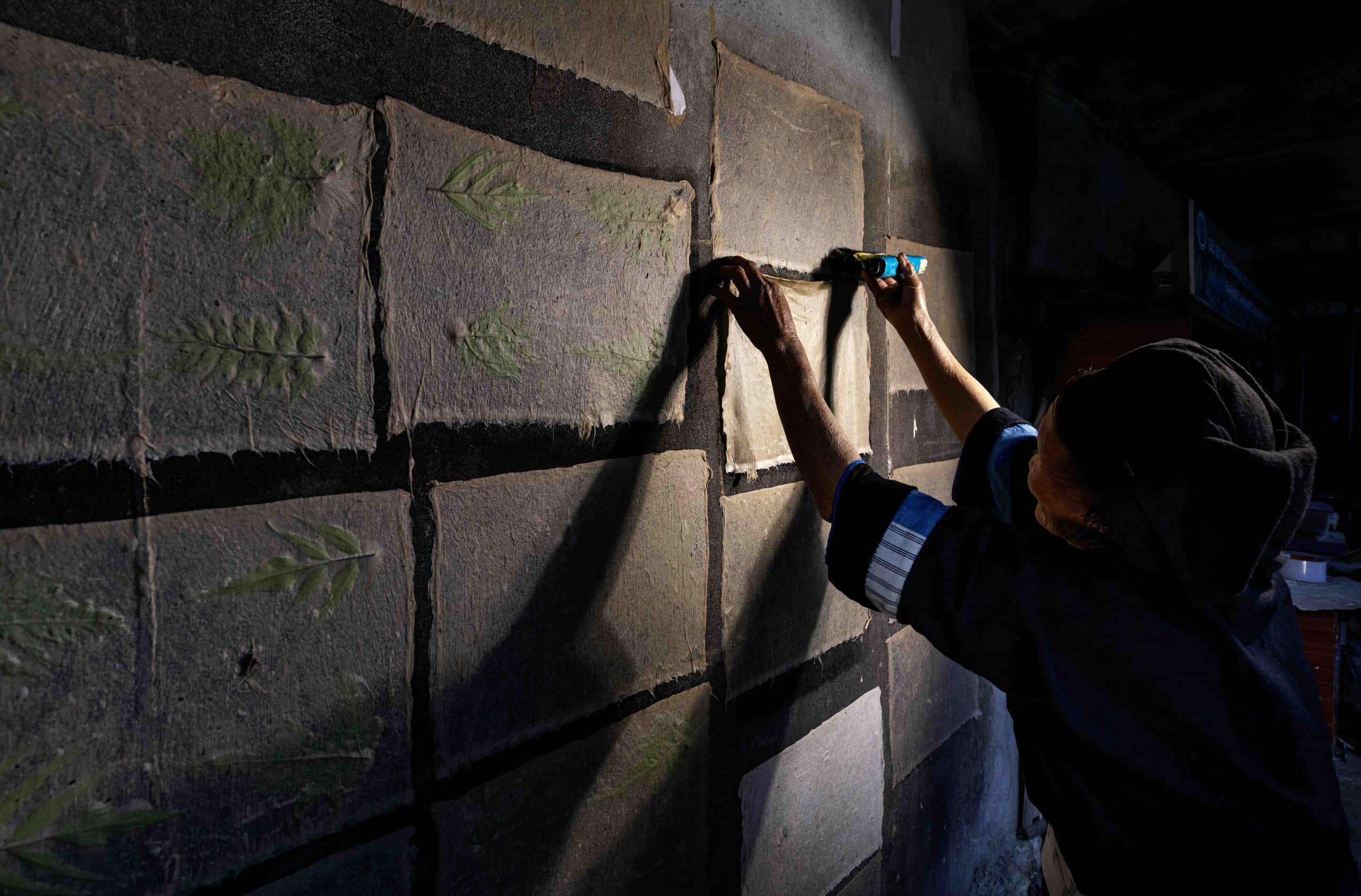
When making paper, the white bark is mixed with slaked lime and stewed thoroughly, then washed, soaked in water, and beaten into a pulp. The pulp is poured into a water tank, mixed with a lubricating agent extracted from the khua hao vine, and stirred until smooth. The artisan uses a mold to form each thin sheet, stacks them neatly, and spends two hours pressing out all the water. Finally, each sheet is carefully and gently peeled off and pasted onto house walls or partitions to be dried by the sun and wind.
As times change, the Nung An people’s paper-making craft is more than a livelihood, reflecting the enduring bond between humans, nature, and cultural roots. Each rustic sheet of paper bears the imprints of tree bark, slaked lime, and highland sun and wind – shaped by the diligent and skillful hands of local artisans. Today, this heritage of Cao Bang’s borderlands is adapting to the rhythms of contemporary life. Making giay ban is a cultural activity. The resulting paper is transformed into handmade tourism products.