Story: Ngo Nam
Photos: Minh Tu
Vung Tau captivates visitors not only with its blue seas, sunlit roads, and ocean breeze, but also with rich layers of history and culture. Amid the city’s lively rhythm lie places that slow one’s steps – where echoes of the past blend with the murmur of waves and the whisper of wind. Among them, the White Palace (Bach Dinh) and the Robert Taylor Museum of Worldwide Arms stand as striking landmarks, preserving the memory of a land that has witnessed countless transformations.
A Royal Legacy on the Hillside
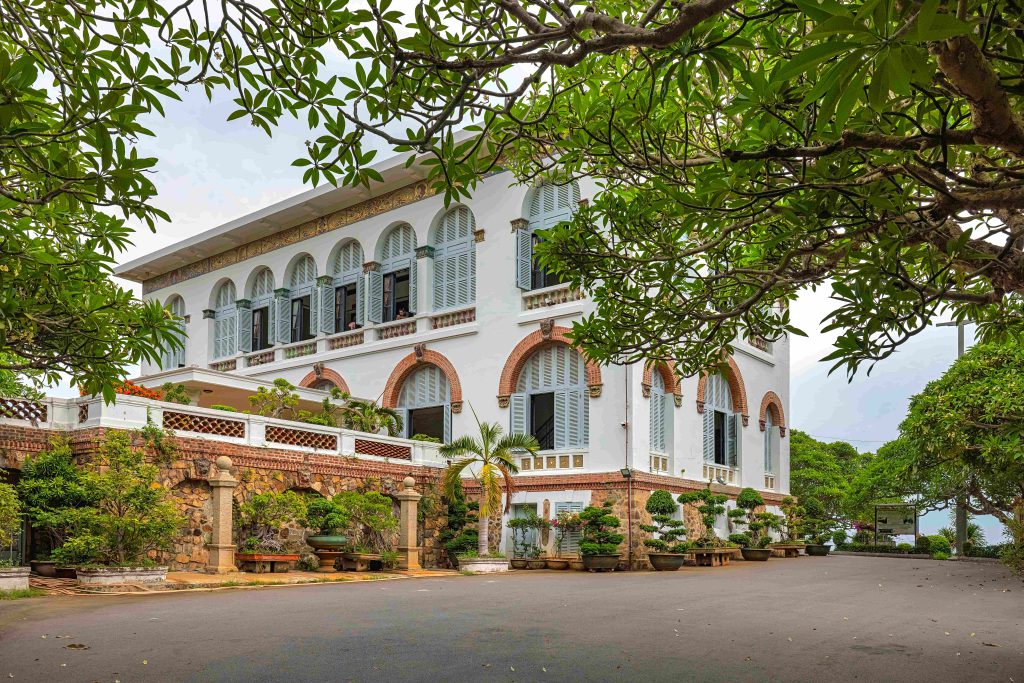
Nestled against Nui Lon (Big Mountain) and overlooking Front Beach, the White Palace gleams in elegant white, its red-tiled roof framed by frangipani and teak trees that cast shade year-round. Built between 1898 and 1902 under Governor-General Paul Doumer, the building was originally named Villa Blanche – “the White Villa.” Before April 1975, it served as a summer residence for French governors and senior officials of the former colonial regime. In 1992, it was recognized as a National Historical and Cultural Relic and opened to the public.
The White Palace’s architecture bears the hallmarks of late 19th-century European design – tall columns, graceful arched windows, airy corridors, and balconies that face the sea. Adorning three façades are eight Greco-Roman stone busts, lending the structure a refined, classical charm. Inside, visitors can admire a collection of antiques, including European porcelain, bronze statues, and ancient vases.
Beyond its architectural beauty, the White Palace is also a silent witness to Vietnam’s past. In 1907, it housed Emperor Thanh Thai – a patriotic monarch who was dethroned and imprisoned for resisting French colonial rule. Thus, this serene villa tells a profound story of national pride and the yearning for freedom.
A Chronicle of War and Civilization by the Sea
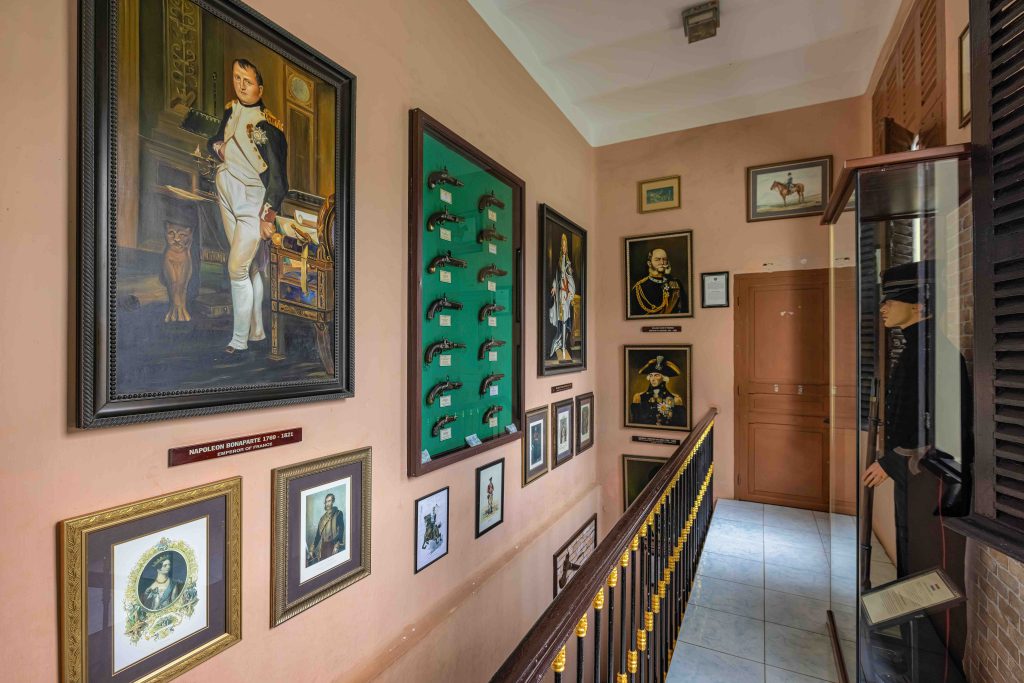
If the White Palace speaks of Vietnam’s triumph over its colonial past, the Robert Taylor Museum of Worldwide Arms tells a global story of warfare and human ingenuity. Located at 98 Tran Hung Dao Street, the museum was founded in 2012 by British collector Robert Taylor.
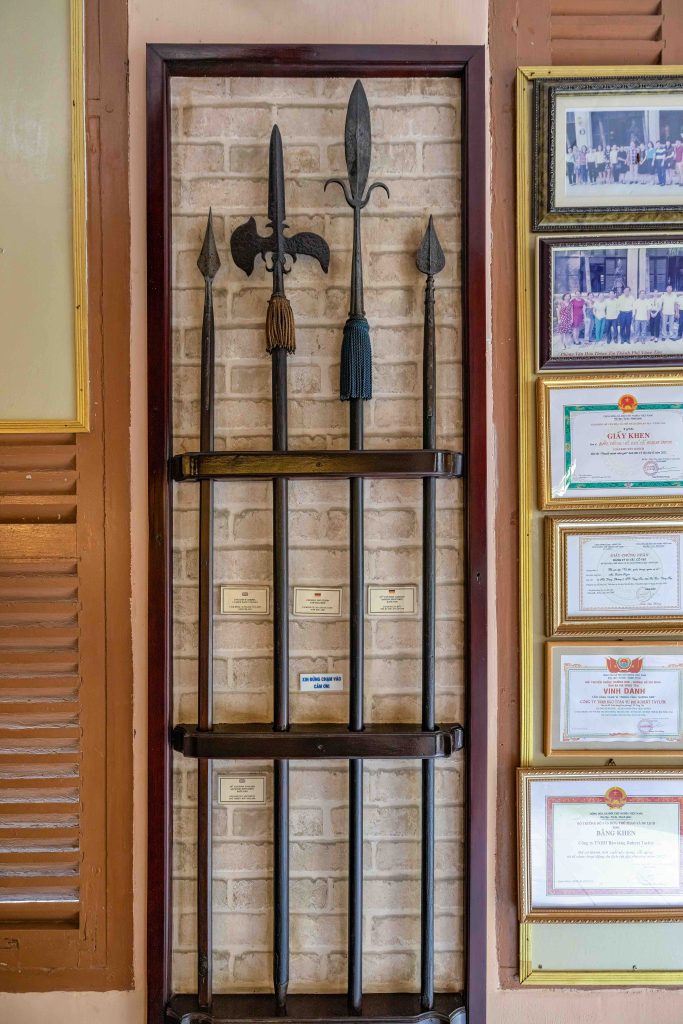
Housed in a restored French-style mansion spanning 1,500 square meters, the museum offers a vivid, cinematic experience. Life-sized mannequins dressed in period uniforms and bearing authentic weapons bring history to life. The museum’s collection of more than 4,000 artifacts – including firearms, swords, and military attire from different nations and eras – is arranged thematically: from medieval European armory and Roman warriors’ armor to Japanese samurai gear and 20th-century machine guns.
Each exhibit is carefully contextualized, weaving together elements of culture and history. Every sword, gun, or uniform tells a story of power and conflict, craftsmanship and artistry, survival and legacy. Rather than portraying weapons as cold instruments of war, the museum invites reflection: Why were they made? How were they used? Why were they buried, and how did they resurface here? These questions turn a visit into more than a tour, taking guests on a journey through time, technology, and the evolution of civilizations.
Where the Past Meets the Present
Amid the sunlit modernity of Vung Tau, the White Palace and the Robert Taylor Museum of Worldwide Arms stand as living testaments to history’s enduring rhythm. They remind visitors that beyond its tranquil beaches and vibrant streets, Vung Tau is also a meeting place between past and present, between people and their stories, between land and the vast sea, and the timeless pulse of memory.