Tran Tan Vinh
For the many ethnic groups dwelling in the vast Truong Son Range, sticky rice cakes are more than simple food – they are gifts rich in human meaning. Thoughtfully made and delicately fragrant, the cakes are offered to honored guests and given to close kin as tokens of affection. Most importantly, they serve as offerings to deities and ancestors during communal festivals such as harvest prayers, new rice celebrations, and weddings.
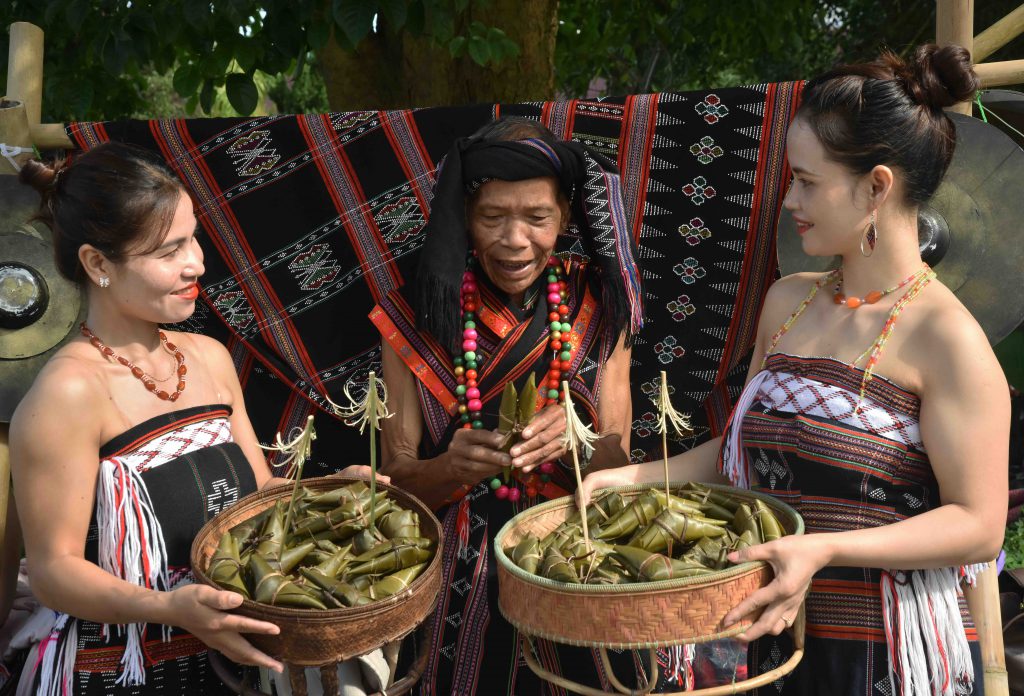

Buffalo horn cakes
True to its name, this cake – shaped like a buffalo horn – is called banh cuot or a cuot by the Co Tu people. It is wrapped in dot leaves (a type of wild foliage), tied with bamboo strips, and made from upland sticky rice. Locals climb the mountains to find large, intact dot leaves, which are picked, washed, and kept moist. The cook cuts a dot leaf, pours rice into it, bends the leaf’s tip to form a sharp point, and secures this wrapped parcel with bamboo ties. Two buffalo horn cakes are tied together and soaked in cold water to soften the sticky rice. The water must come from a clear upstream mountain spring to give the cake its symbolic purity. After steaming, the dot leaf is peeled back to reveal a soft green hue. The cooked rice is fragrant, infused with the leaf’s fresh scent. If left uneaten for too long, the cake hardens but can be grilled over glowing coals. Upon grilling, the outer layer turns crisp while the inside remains tender and aromatic.
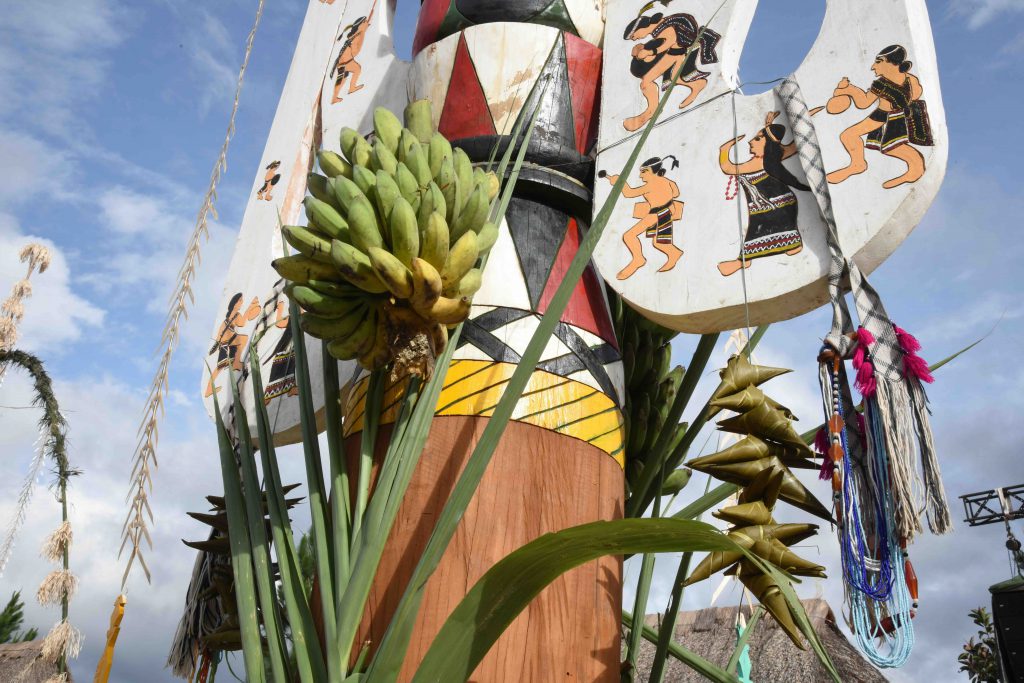
are strung from
a pole during the
Harvest Festival
Full-moon-shaped cakes
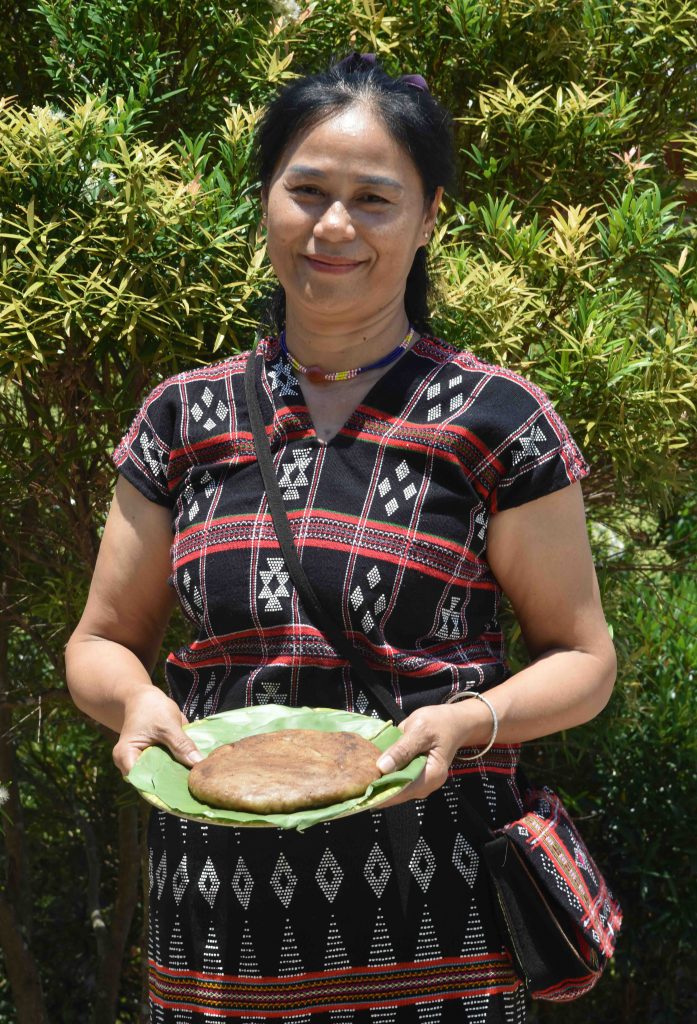
Round, full-moon–shaped cakes made from pounded sticky rice and black sesame are common among the Co Tu, Ta Oi, Bru–Van Kieu, and Pa Co. The Co Tu call their version a zuh, while the Van Kieu call it a deep man. At festivals – ancestor worship, weddings, harvest celebrations, and the Lunar New Year – a yoh cake is always present. The ingredients are sticky rice, black sesame, and rock salt, but the process is meticulous. Only strong women have the stamina to wield the pestle and pound the sticky rice.
The rice is washed, drained, and steamed over a charcoal fire. Black sesame seeds are mixed with salt and dry-roasted until fragrant. After the sticky rice is cooked, it is placed in a mortar and pounded while the ground sesame is gradually added. To ensure the cake is smooth and chewy, the pounding must be constant and steady. When the pulverized rice grains and sesame have formed a dark paste, the mixture is spread by hand onto a bronze, aluminum, or bamboo tray and molded into a round, full shape like the moon. A small bamboo knife is used to cut it into pieces. Best eaten fresh, a yoh is chewy with the sweetness of upland sticky rice and the gentle aroma of black sesame. Locals often take a few pieces as sustenance when heading into the forest or fields.
Cakes of love
These fragrant sticky rice cakes are indispensable offerings and essential for wedding ceremonies among many ethnic groups. For those in the Co Tuic language group, a cuot is known as the cake of love, always present at traditional weddings. According to Co Tu customs, only the bride’s family prepares a cuot to serve to guests and present as gifts to the groom’s family. Among the Van Kieu, the bride’s family must bring a yoh cakes and xan (dresses) to the groom’s house for the ceremony to send their daughter to her new home.
This cake is always prepared in pairs: the larger represents the man, the smaller the woman. During the wedding ceremony, the bride and groom share the cakes to symbolize their union as husband and wife.
Made from simple ingredients yet rich in meaning, these fragrant, chewy sticky rice cakes have become a distinctive element of the culinary culture of the ethnic groups living in the majestic Truong Son Range.