
Story: Ha Phuong Linh
Photos: Le Lai
The current of art is shifting, and the boundaries between East and West are steadily transforming. Could the Year of the Horse become a moment of acceleration — one that leaves a mark on both inherited and emerging values?
The horse of “I” or the horse of “we”?
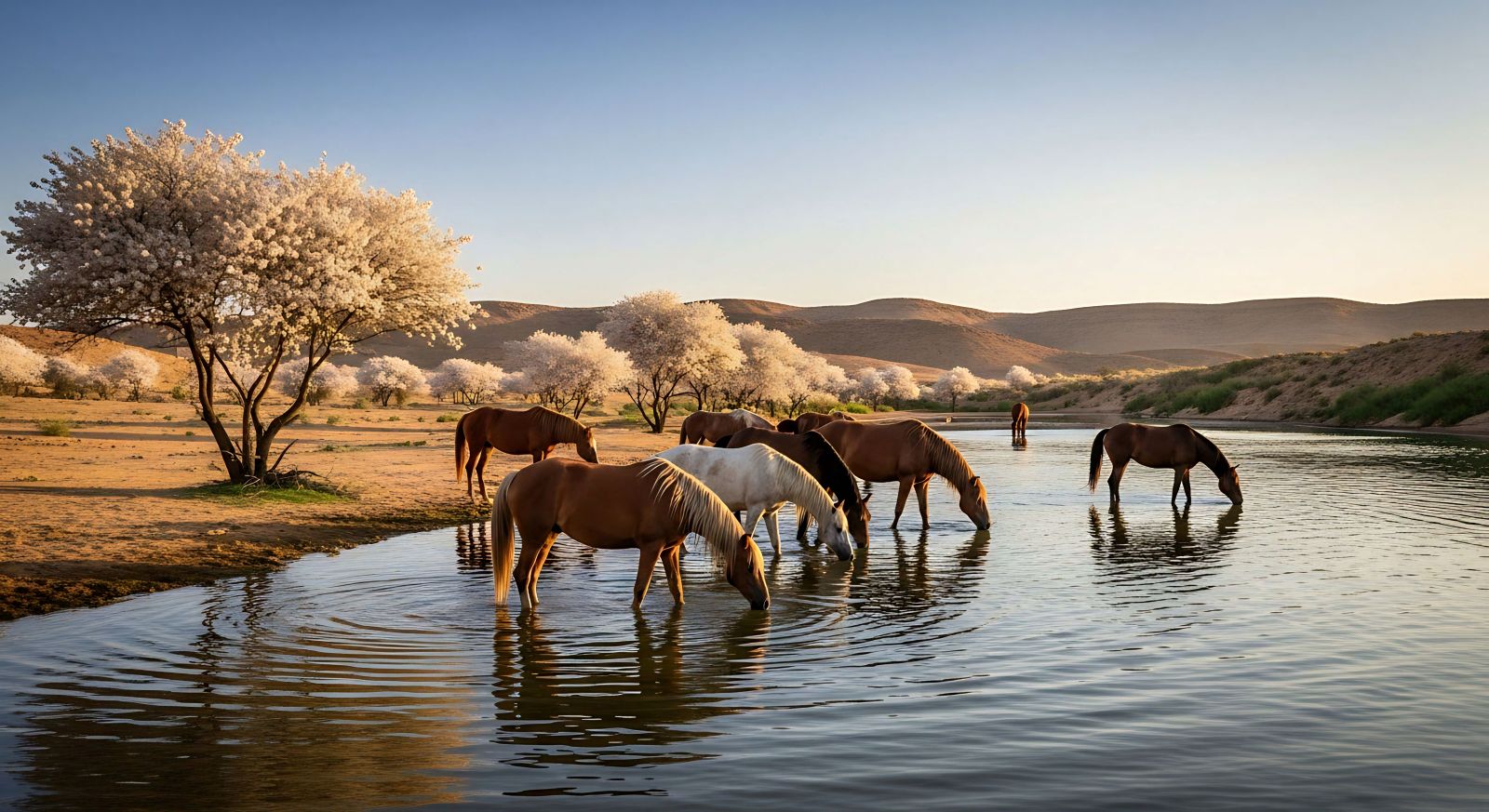
Throughout the history of human civilization, few animals have occupied such a central place in both material and spiritual life as the horse.
Much has been written about “the horse” in artistic discourse, yet few pause to consider this: while the Western horse often exalts the individual ego — serving as a pedestal of power and will, closely aligned with the notion of Imperium, supreme authority — the Eastern horse embodies a different realm of meaning. It is a cosmic and spiritual totem, a symbol of universal energies and an independent, sacred being.
In the Western ancient world, the equestrian statue of Marcus Aurelius (c. 175 AD) — the only surviving pre-Christian bronze of a Roman emperor — stands as a pinnacle of Roman realism. Yet its power lies not in the animal’s ferocity, but in its contrast with the rider.
Emperor Marcus Aurelius appears not in martial armor but in civilian robes, his expression marked by Stoic composure and introspection. In another case, Verrocchio’s horse is striking for the extreme tension of its musculature.
Here, the horse becomes an extension of the commander’s ego. Where Eastern art often embraces anonymity or collective symbolism, Renaissance equestrian sculpture celebrates the specificity of the individual.
Each horse is meticulously studied in breed and proportion, all in service of immortalizing the rider’s earthly glory.

During the Tang dynasty, the aesthetic of abundance produced horses with full bodies, rounded haunches, and thick necks. These were not gaunt warhorses, but symbols of prosperity along the Silk Road. This fullness reflected a society confident, open, and affluent.
Influenced by Shinto belief, Japan’s sacred horses — including the clay Haniwa figures (3rd–6th century) — appear simplified, sometimes abstracted. These hollow earthen cylinders, with deeply carved eyes, possess a quiet mysticism. Unlike the polished refinement seen elsewhere, Haniwa embrace the rawness of clay. Their beauty lies in simplicity and their ability to evoke a gentle melancholy.
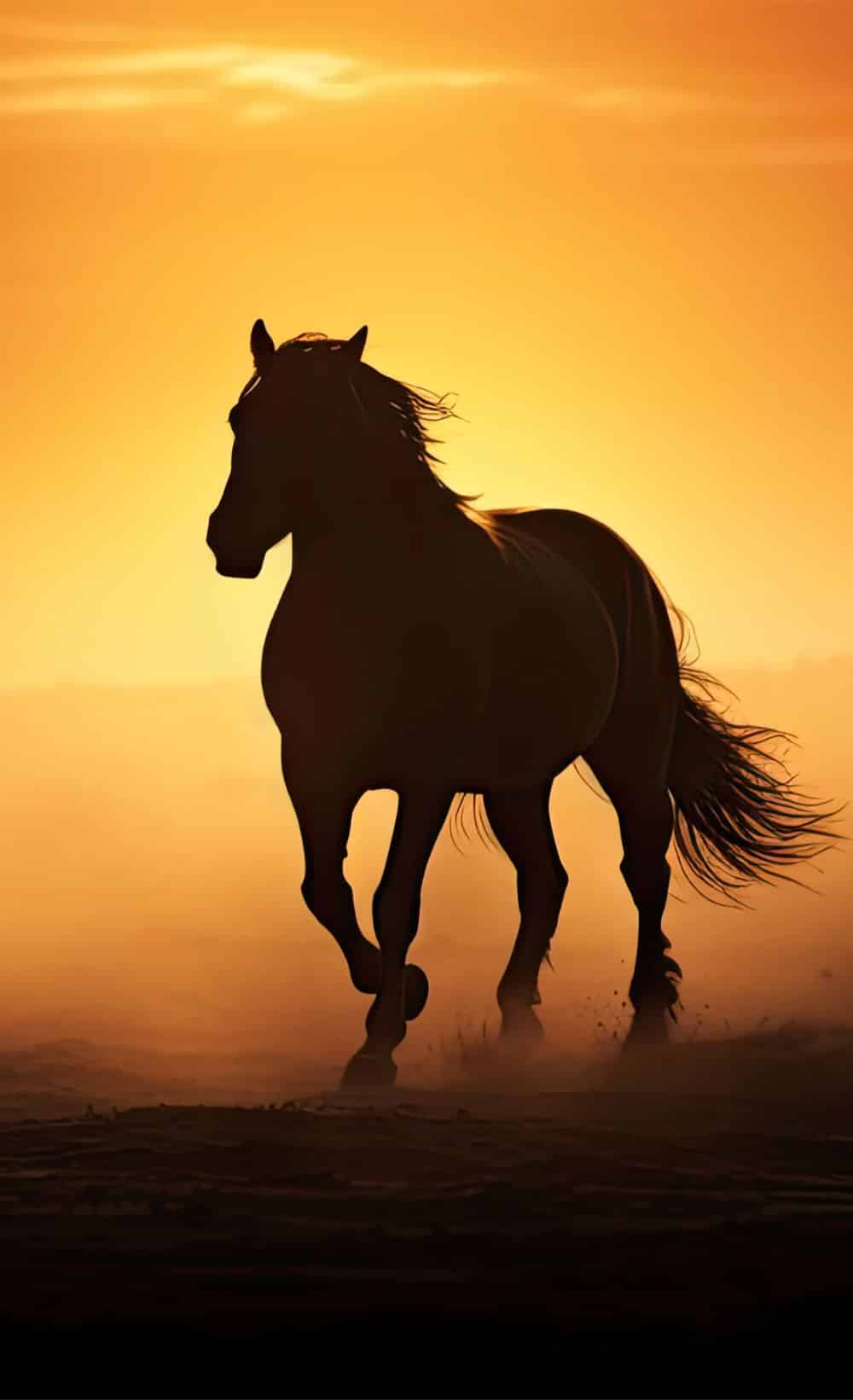
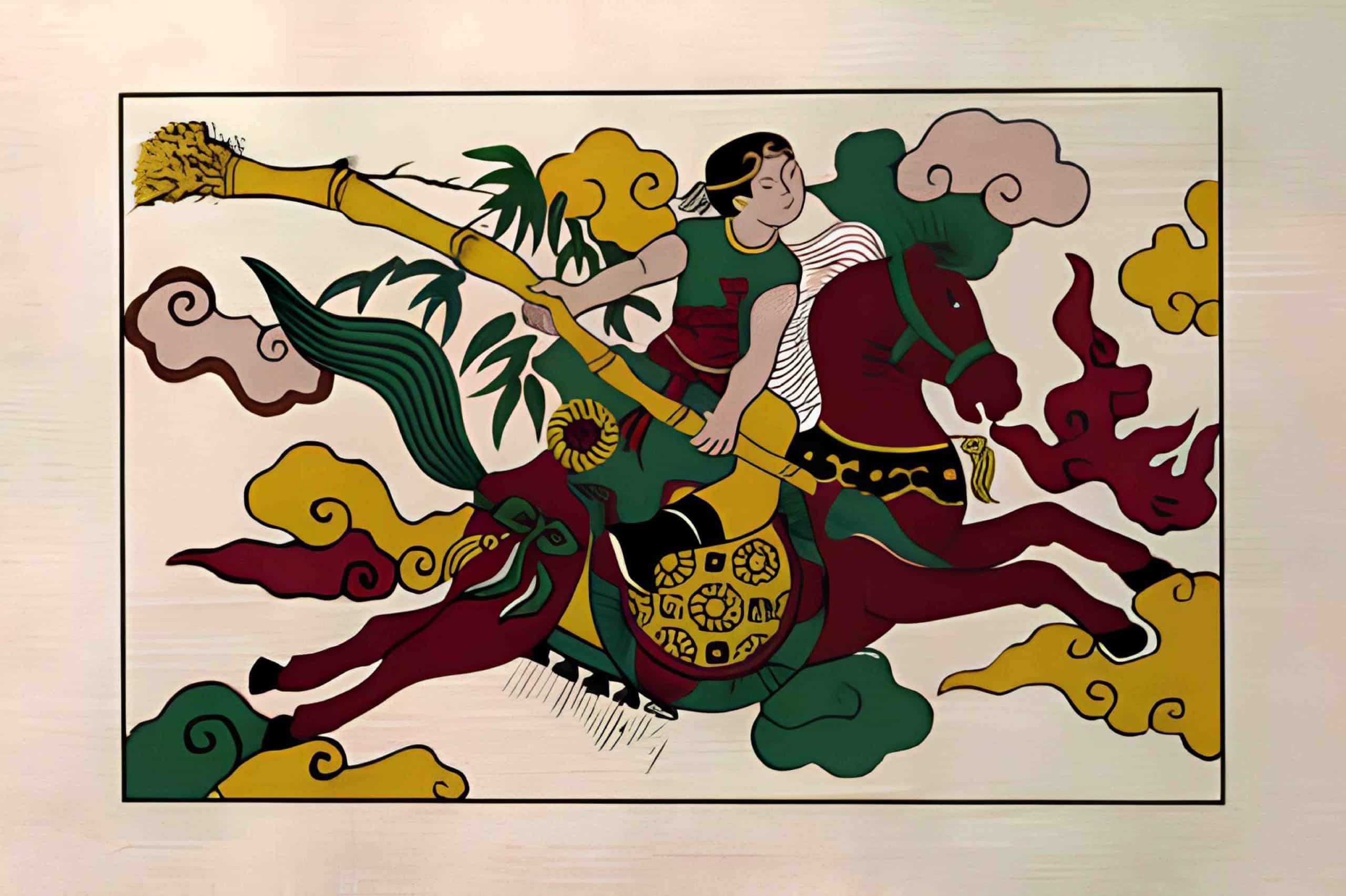
Though shaped by Chinese Buddhist and Confucian influences, the Vietnamese infused the horse with a rustic, human warmth. On celadon or brown-glazed ceramics, the horse appears small and graceful. The stone horse at Phat Tich Pagoda (1057) is a rare masterpiece: kneeling, forelegs folded, head bowed. Not a fierce warhorse, but one subdued by the Dharma — expressing surrender and enlightenment.
Across countless cultural fragments, horses are rendered with expressive freedom, sometimes ridden by figures with arms outstretched in dance — echoing the optimistic spirit of the Dong A era. The horse leaves the solemn court to return to the village, appearing in scenes of ancestral homecomings, hunts, or festive processions. It does not tower over humanity; it walks beside it. If Pegasus symbolizes poetic inspiration and the individual hero, the Vietnamese horse represents the sage, auspiciousness, the balance of yin and yang, and the yearning to transcend the earthly realm.
A time to open the distant current
Western philosophy — shaped by Greek and Roman thought — places humanity as the measure of all things; thus the horse must be subdued to affirm human centrality. Eastern philosophy — informed by Taoism and Buddhism — sees humanity as a small part of the cosmos; the horse is respected as a living being capable of connecting with supernatural forces like Dragons, Gods, and Buddhas. Yet in the convergence of modern art, particularly in the 20th and 21st centuries, cultural exchange has blurred these rigid divisions. Contemporary artists have forged hybrid languages, combining Western technique with Eastern sensibility.
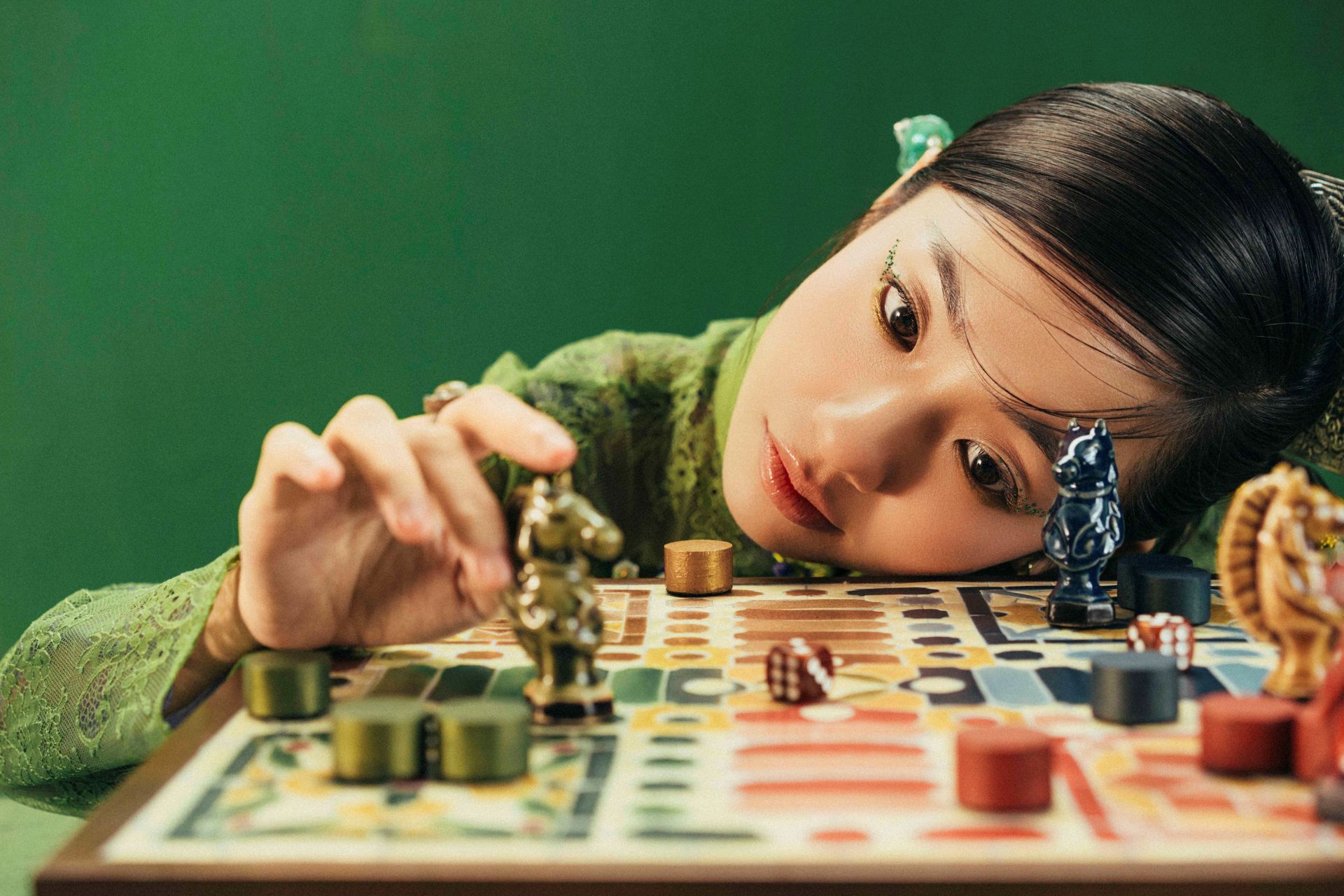
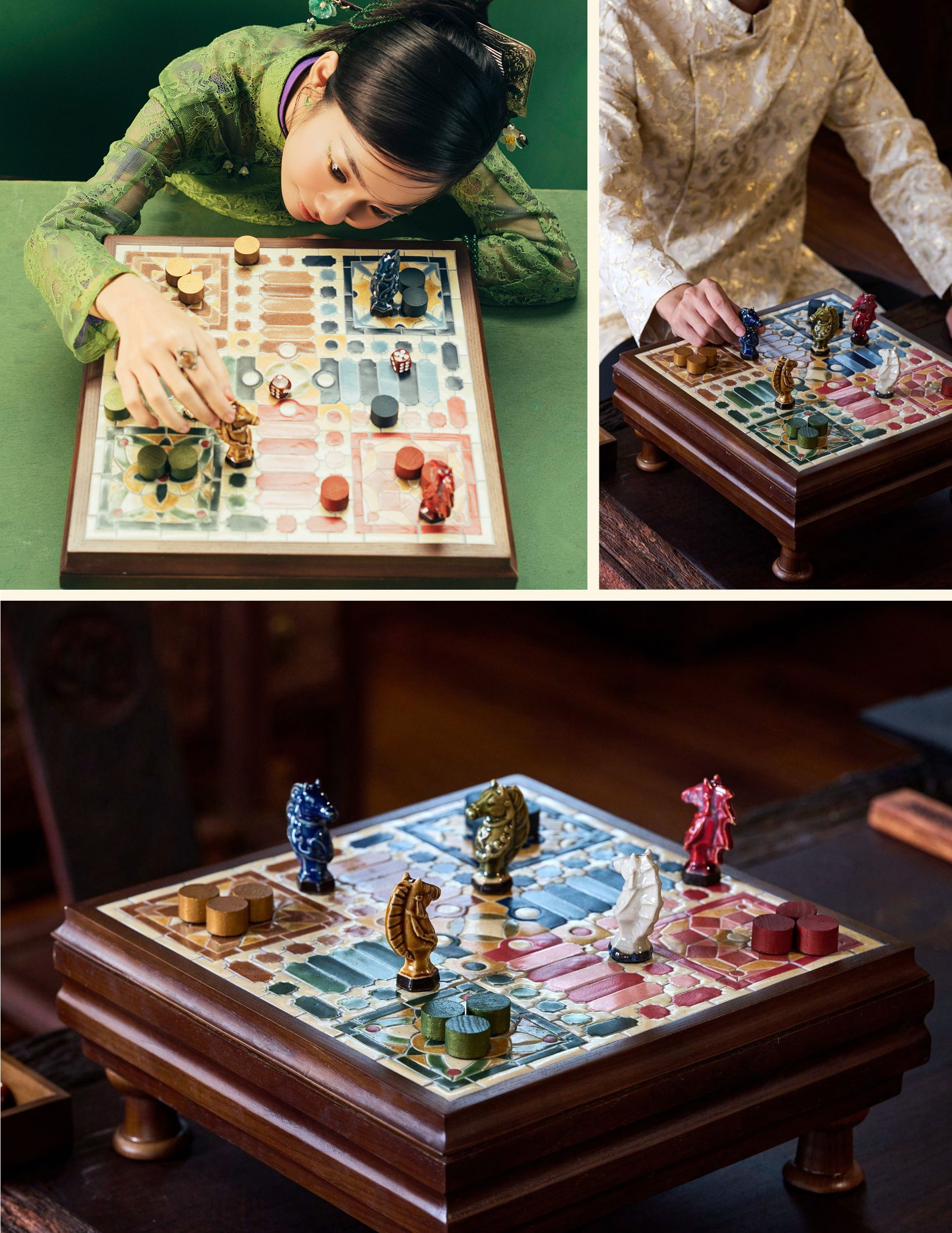
Within this global current, the artisans of QMOSAIC present the limited-edition Mosaic Tea Table “PHI MÃ AN NAM” (The An Nam Mosaic Low-Table). The work inherits a spirit of East–West dialogue, expressing contemporary mosaic art while preserving the enduring beauty of Bat Trang ceramics.
Rather than focusing on a sculptural horse figure, the “Phi Mã An Nam” mosaic table draws inspiration from the low, mobile tea table — once the center of gathering and conversation on traditional wooden platforms and divans — intertwined with the folk game of Co Ca Ngua (Vietnamese Ludo). The piece transforms fluidly between a decorative centerpiece tray and a hybrid game table.
Entirely handcrafted, its surface is composed of finely cut, multicolored ceramic fragments, some as small as seven millimeters. Such intricacy demands both refined technique and the seasoned expertise of traditional craftsmanship.
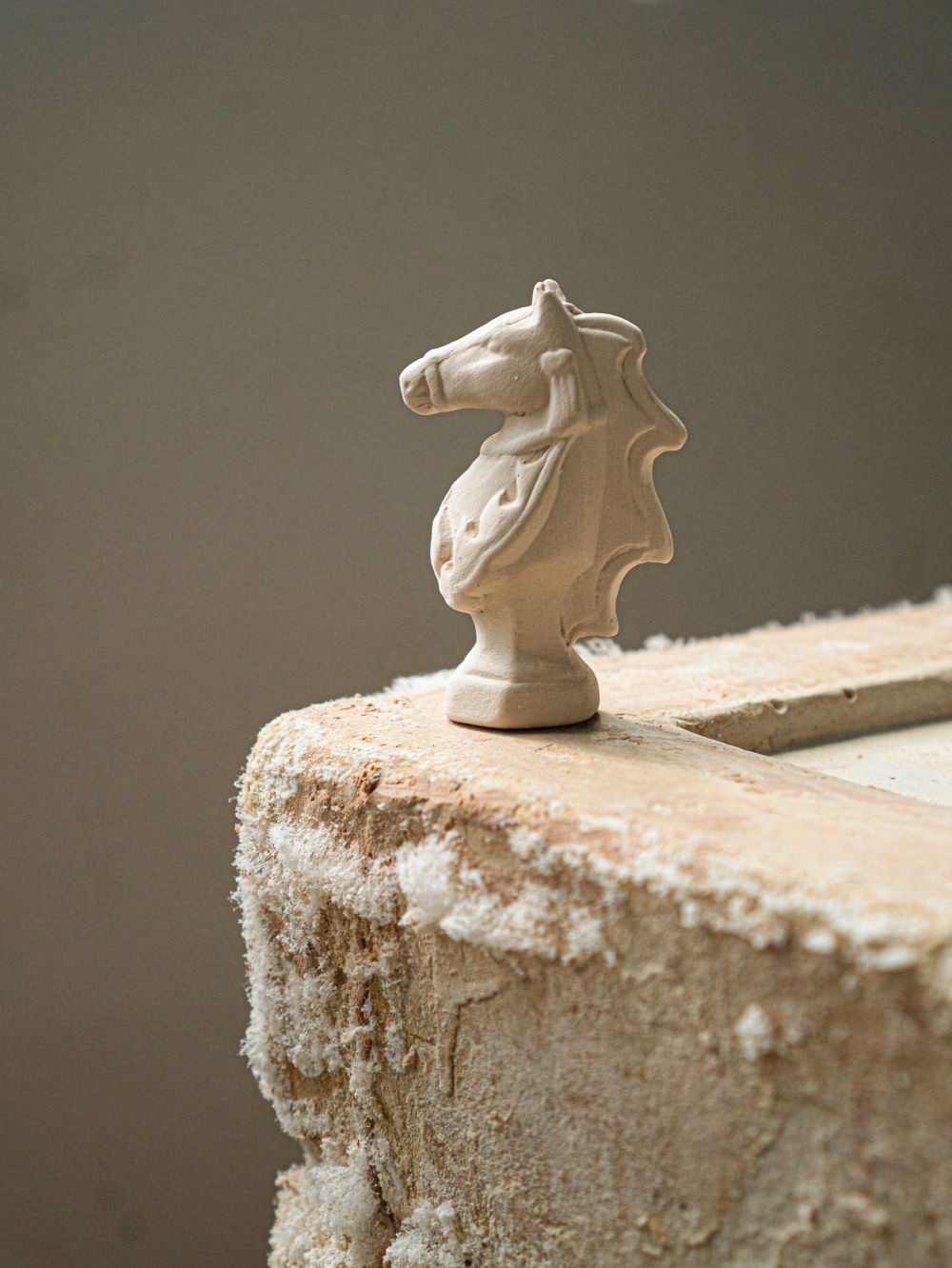
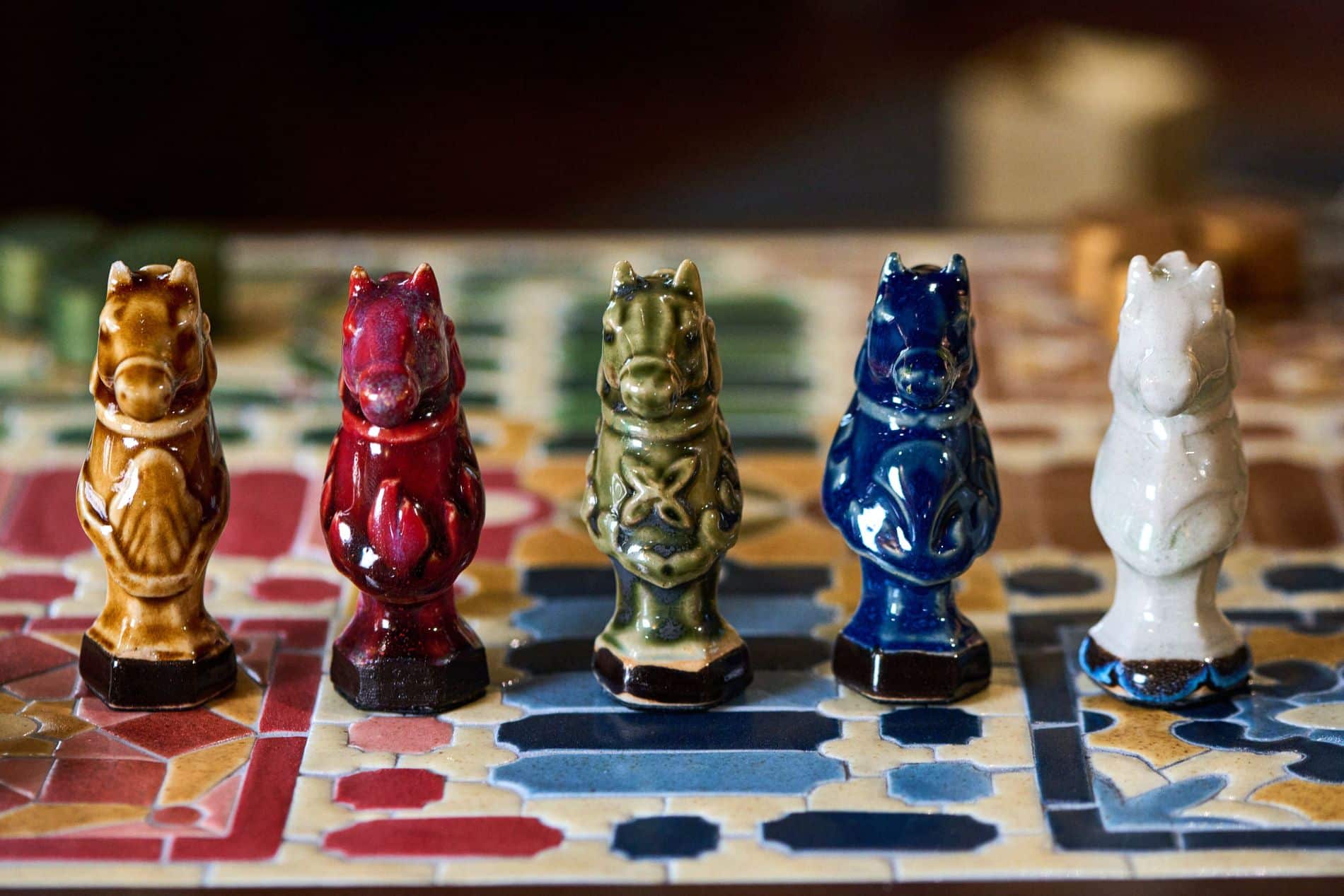
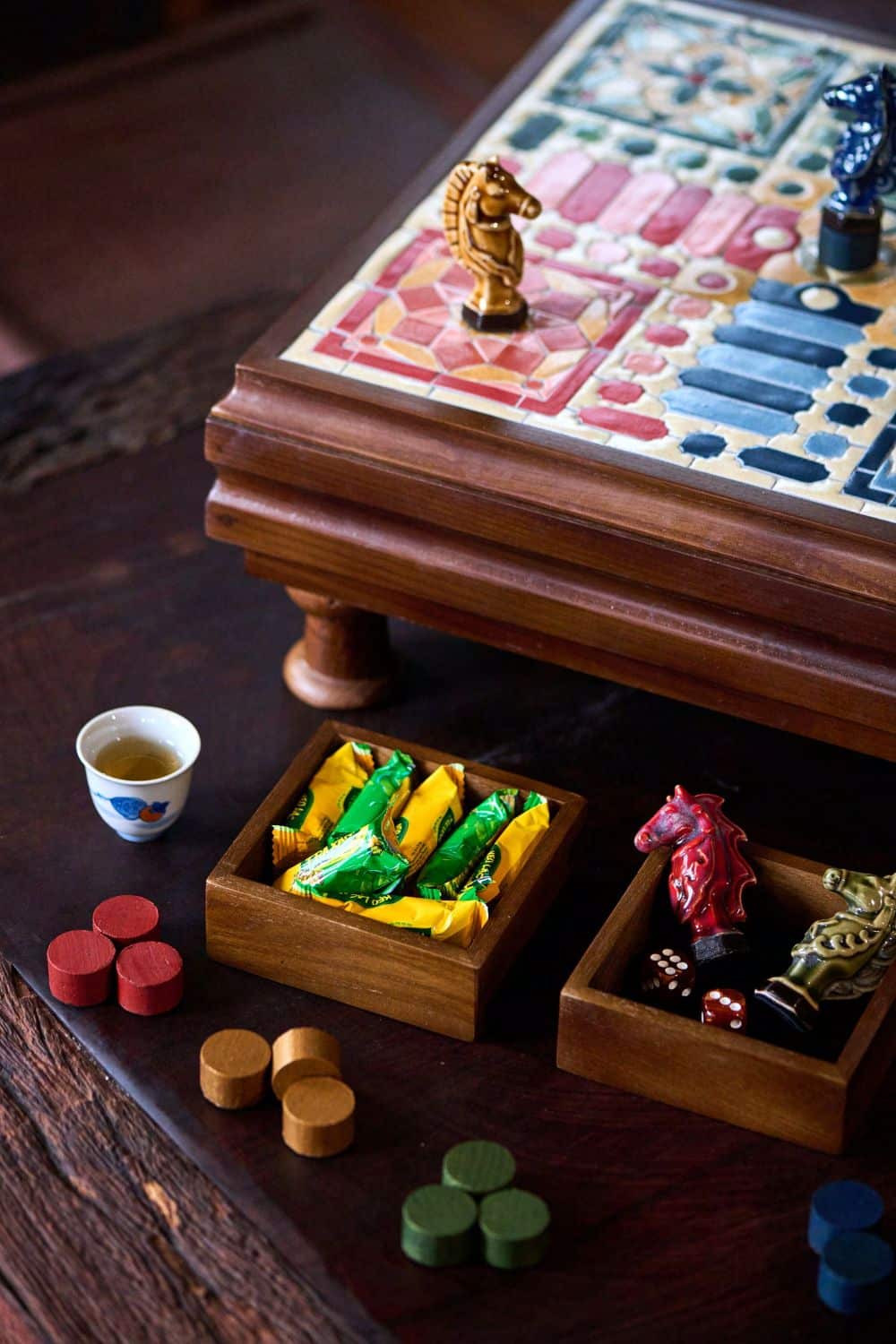
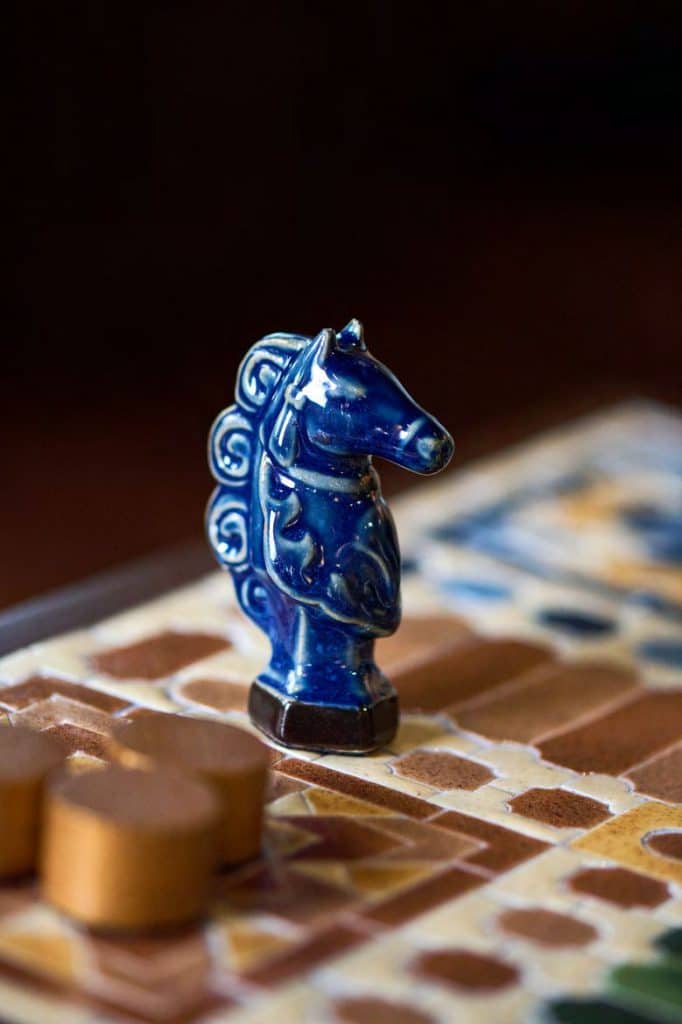
Honoring architectural heritage, the redesigned table legs draw core inspiration from the base of Dong Son bronze drums, combined with Russian oak to create a composition that is striking yet restrained. Five horse tokens, poised in stillness yet ready to surge forward, join 12 vibrant tokens in five colors representing the Five Elements — Metal, Wood, Water, Fire, and Earth — symbolizing the cyclical energies of a year. The result is a richly layered yet contemporary aesthetic.
The Mosaic Tea Table “PHI MÃ AN NAM” stands as evidence of a longer artistic journey — for the individual creator and for popular culture alike. As the Year of the Horse arrives and movement becomes instinct, the collection carries a message: Listen to the gallop within. Dare to step beyond old frameworks, to break from familiar limits, and to write an integrated journey marked by one’s own authentic imprint.