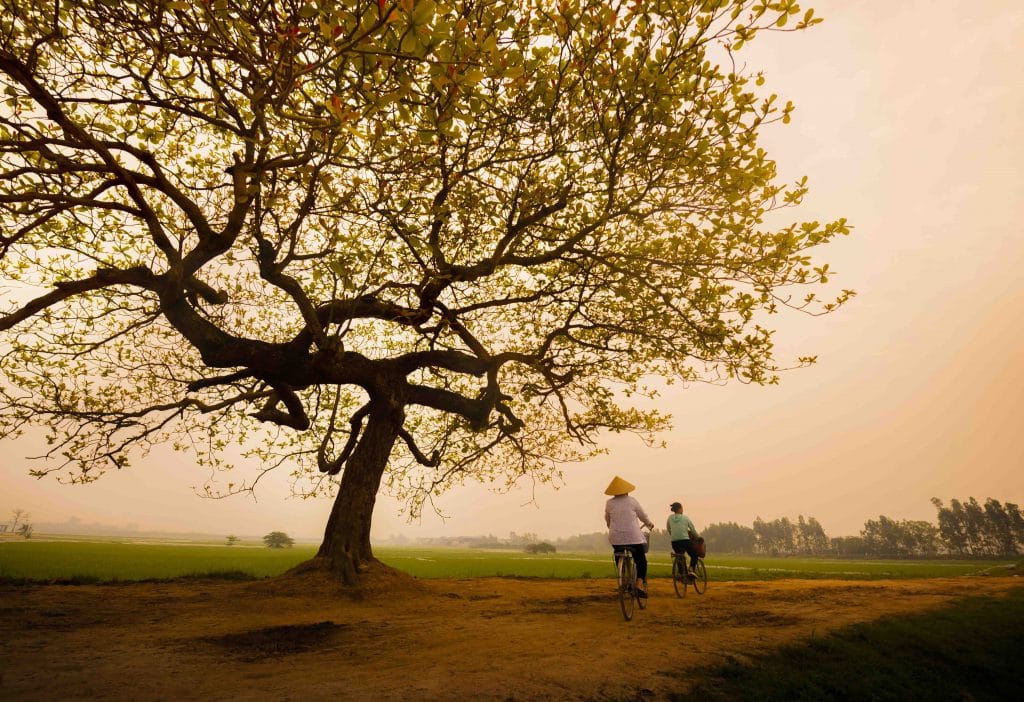
Story: Ha Xuyen Khe
Photos: Nguyen Sanh Quoc Huy
Explore the ancient stone carving village at the foot of the Marble Mountains in Danang.
“If you’re heading to Non Nuoc, then go.
River in front, sea behind, mountains by your side…”
This simple folk verse has long described Non Nuoc in Danang Province, where mountains lean toward the river and mirror themselves in the sea. Known for its striking scenery, the area boasts caves, pagodas, and sites tied to legends and local lore. Within this setting lies a craft village more than 300 years old, where skilled stone carvers work day after day. The steady tapping of chisels on stone forms the soundtrack in this living museum.

A trade built by skilled hands
From the late 17th to the 18th century, Vietnamese settlers moved to the foot of the Marble Mountains and established the villages of Hoa Hai and Quan Khai. These settlers brought new ways of life and trades. Alongside rice farming, people in Quan Khai excavated stone from the mountains to earn a living, founding the stone carving trade. An inscribed stele dated 1678 mentions stone carvers from Quan Khai, one of the earliest records of this craft.
The village’s earliest products were simple, functional items such as mortars, millstones, and tombstones. Over generations, local craftsmen refined their skills and began taking on work beyond the village, contributing to larger projects. By the early 19th century, they were embellishing stone objects with vivid images of dragons, kylins, tortoises, and phoenixes, leaving their mark on communal houses, pavilions, and Nguyen-dynasty tombs. In recognition of their skill and dedication, some artisans were granted a low official rank of Cuu pham, equivalent to a corporal in the Nguyen dynasty military. From that period onward, stone carving in Non Nuoc flourished and continues today.
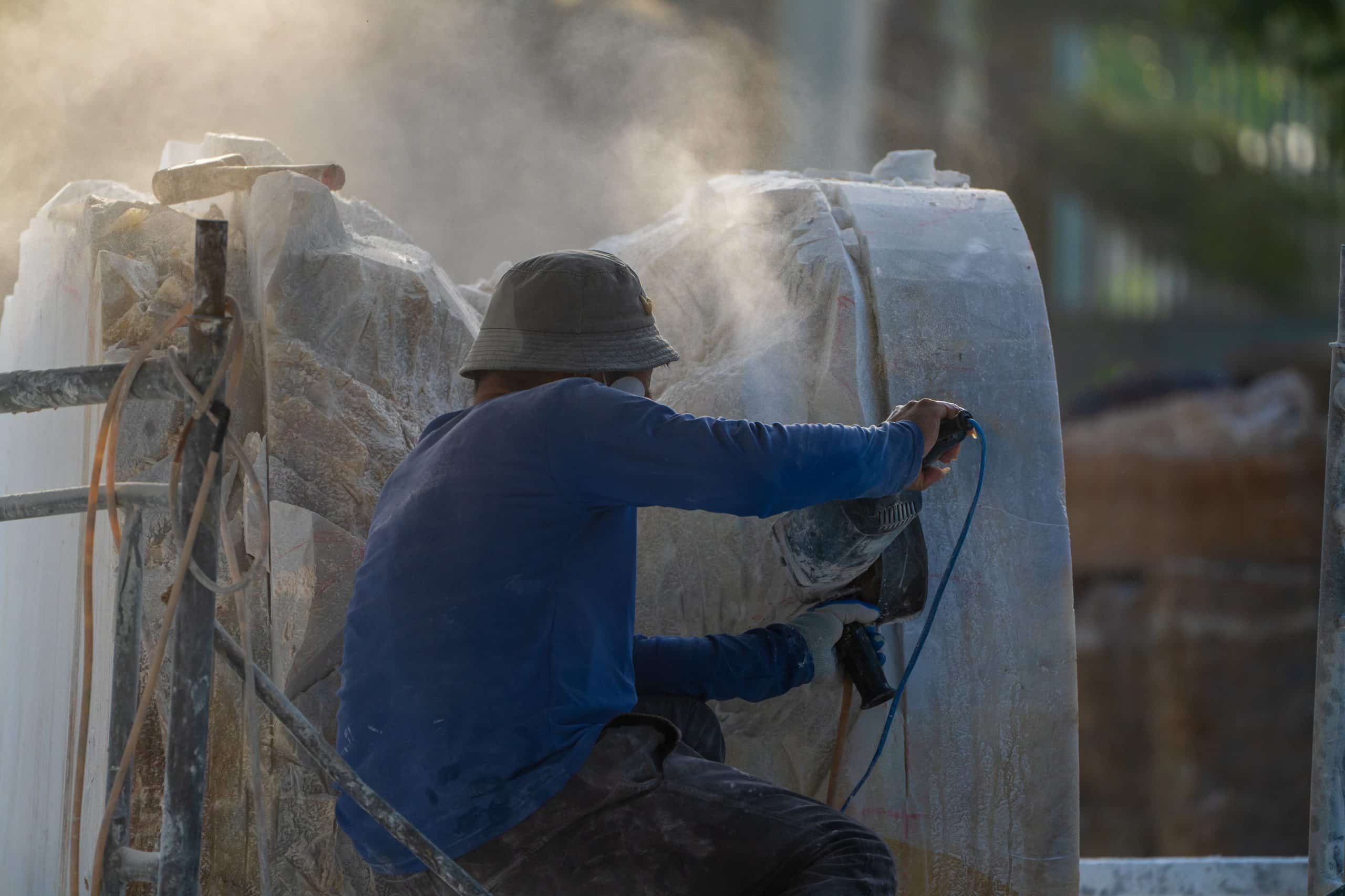
The strength of this craft lies in a working process preserved across generations. It begins with selecting stone, then splitting and cutting it into rough blocks. Tasks are divided by skill level: apprentices carry out the initial chiseling based on sketches, while intermediate and senior workers prepare and shape the basic form. Master craftsmen take charge of defining the main structure, adjusting proportions to precise measurements, and refining details and expression.
Carving fine lines, adding decorative patterns, grinding, and polishing are the stages that demand the greatest skill and judgment, with technical requirements varying by product. To achieve more even, pleasing colors, some workshops also stain the stone using pigments mixed with materials such as used tea leaves, brown polish, or indigo, following their own formulas. Each finished piece reflects both a meticulous process and the accumulated experience of the craftsmen.
Tools used in the trade mix tradition with technical innovation. Craftsmen use sledgehammers, different types of chisels, saws, and grinding wheels to shape, detail, and polish the stone. Today, machines support parts of the process, improving output and allowing larger-scale production. But smooth curves and delicate patterns still depend on the artisans’ skillful hands and trained eyes.
A living cultural space in the city
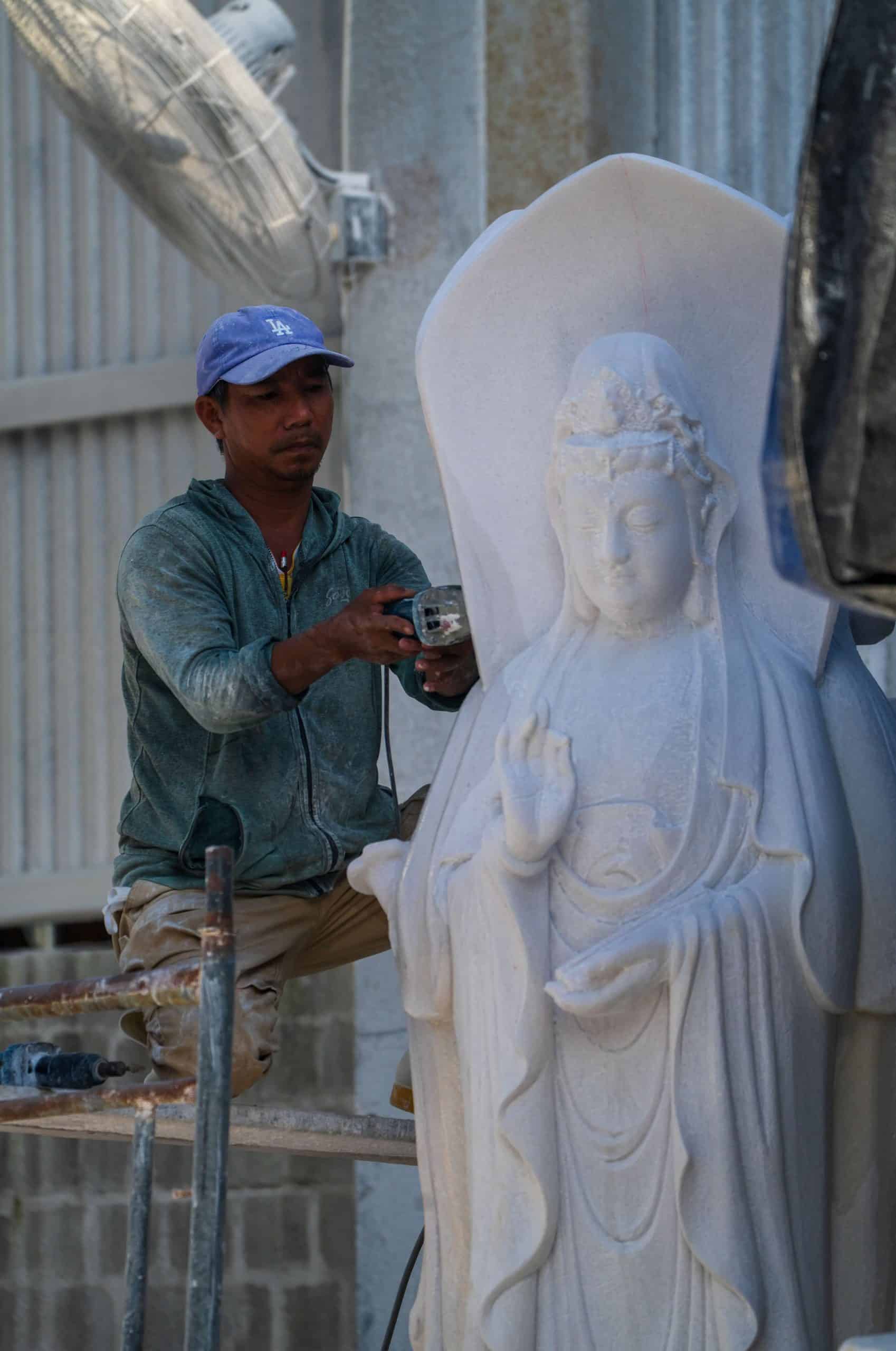
Non Nuoc produces a wide range of products, commonly grouped into ten main categories: religious statues, human figures, stylized figures, animal statues, statues of famous people, tables and chairs, bathtubs, garden lamps, vases, and tombstones. Carved from white, pink, green, or black marble, these works are clean in form and visually distinctive. What truly sets the village apart is its style. Craftsmen blend traditional Vietnamese lines with Champa influences, creating statues and reliefs that reflect the region’s layered cultural heritage.
Beyond production, the Non Nuoc stone craft village functions as a living cultural space. Rituals such as honoring the trade’s founding master on the 6th day of the first lunar month and marking his death anniversary on the 16th day of the third lunar month remain integral to village life. Local craftsmen uphold professional ethics as a bond that unites the community. Over time, the craft has become a symbol of persistence and of the people’s enduring ties to the land and surrounding mountains.
Today, the Non Nuoc stone craft village is home to nearly 500 production facilities, employing more than 3,000 workers. Annual output is valued at around 120 billion VND, accounting for nearly 30% of the total economic value of industries in Ngu Hanh Son Ward. This economic foundation helps ensure stable incomes and supports younger generations who wish to continue the trade. From Danang Province, Non Nuoc stone products travel with visitors across the country and are exported to markets such as France, the United States, and Australia. The village has also become a familiar tourist stop in Danang. Workshops and showrooms line Le Van Hien Street and Huyen Tran Cong Chua Street, creating a scene that is both busy and deeply rooted in everyday life.
In recognition of its cultural value and long-term economic contribution, the stone carving craft of Non Nuoc was designated a National Intangible Cultural Heritage in 2014. The title is more than an honor; it affirms the enduring vitality of this “living museum” within the fast-growing young city of Danang.