Long Ho
Bac Ha, known as the “White Plateau” for the clouds that shroud its peaks year-round, is a melting pot of cultures, home to 18 ethnic groups, including the H’mong, Dao, Tay, Nung, Phu La, and La Chi. Every Sunday, the Bac Ha Market, held in the town center, is more than a place of trade; it is a gathering ground for friendship and cultural exchange among the region’s highland peoples. Over generations, visiting the market has become a cherished tradition, deeply woven into the identity of Bac Ha’s communities.
According to local lore, Bac Ha Market began hundreds of years ago as a place where people from different ethnic groups could convene, exchange goods, and find life partners. It has evolved into an enduring thread of cultural connection.
Every Sunday, from the first pale light of dawn when roosters crow and mist still veils the paths, people from villages such as Ta Chai, Na Hoi, Ta Chu Van, Can Cau, and Lung Phinh – and even from communes tens of kilometers away – make their way to the town center. They cross mountains and hills; some walk, others ride motorbikes with children carried in baskets. Some lead packhorses heavy with goods, while others arrive by bus. Groups of H’mong, Dao, and Phu La girls, dressed in dazzling brocade, chatter and laugh as they go, their voices carrying through the mist and adding bright notes of joy to the lively journey down to the market.
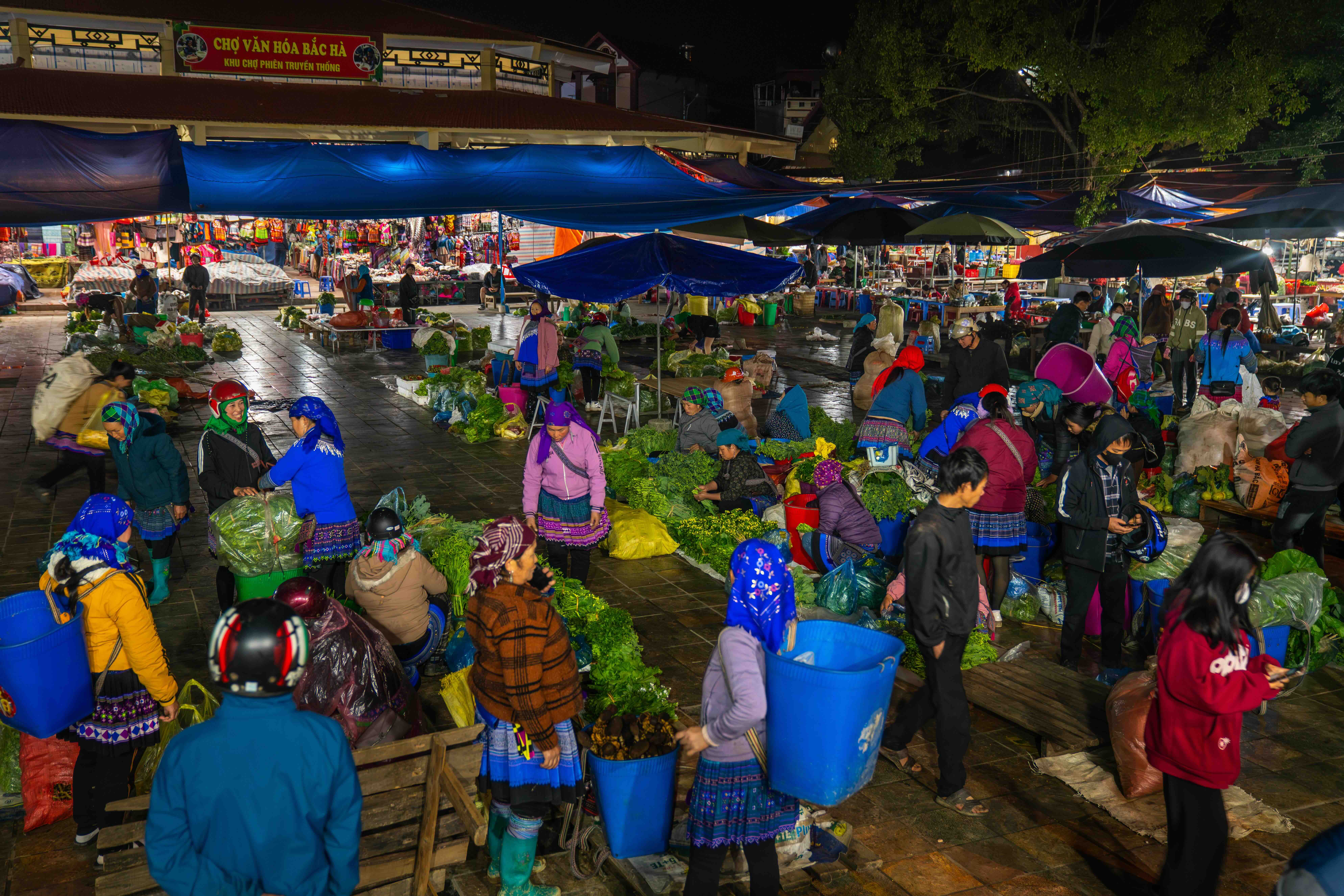
Bac Ha Market unfolds into a vibrant, bustling scene, alive both indoors and out. Beneath the covered pavilions, stalls overflow with brocade, souvenirs from many ethnic groups, and fragrant food stands offering highland specialties. Outside, the courtyard hums with the trade of agricultural produce and medicinal herbs. Locals lay out tarps or arrange their goods directly on the ground – fresh mustard greens, earthy shiitake mushrooms, and prized herbs like pseudo-ginseng for the heart, multiflorous knotweed for hair, dong quai to enrich the blood, and lingzhi mushroom to restore vitality. These are gifts of the mountains, long used in traditional remedies. From food and produce to handmade garments, every item tells a story, weaving together a cultural tapestry as vivid as it is rare.
The market is more than a place of trade. It’s an opportunity to meet friends and enjoy local dishes. Women of all ages can showcase their colorful flared skirts and multicolored headscarves, each piece intricately woven and skillfully embroidered. Children, their cheeks flushed by the dry cold, wear bright, cheerful clothes. The entire market feels like a festival, lively with movement and chatter, alive with the charm and color of the highlands.
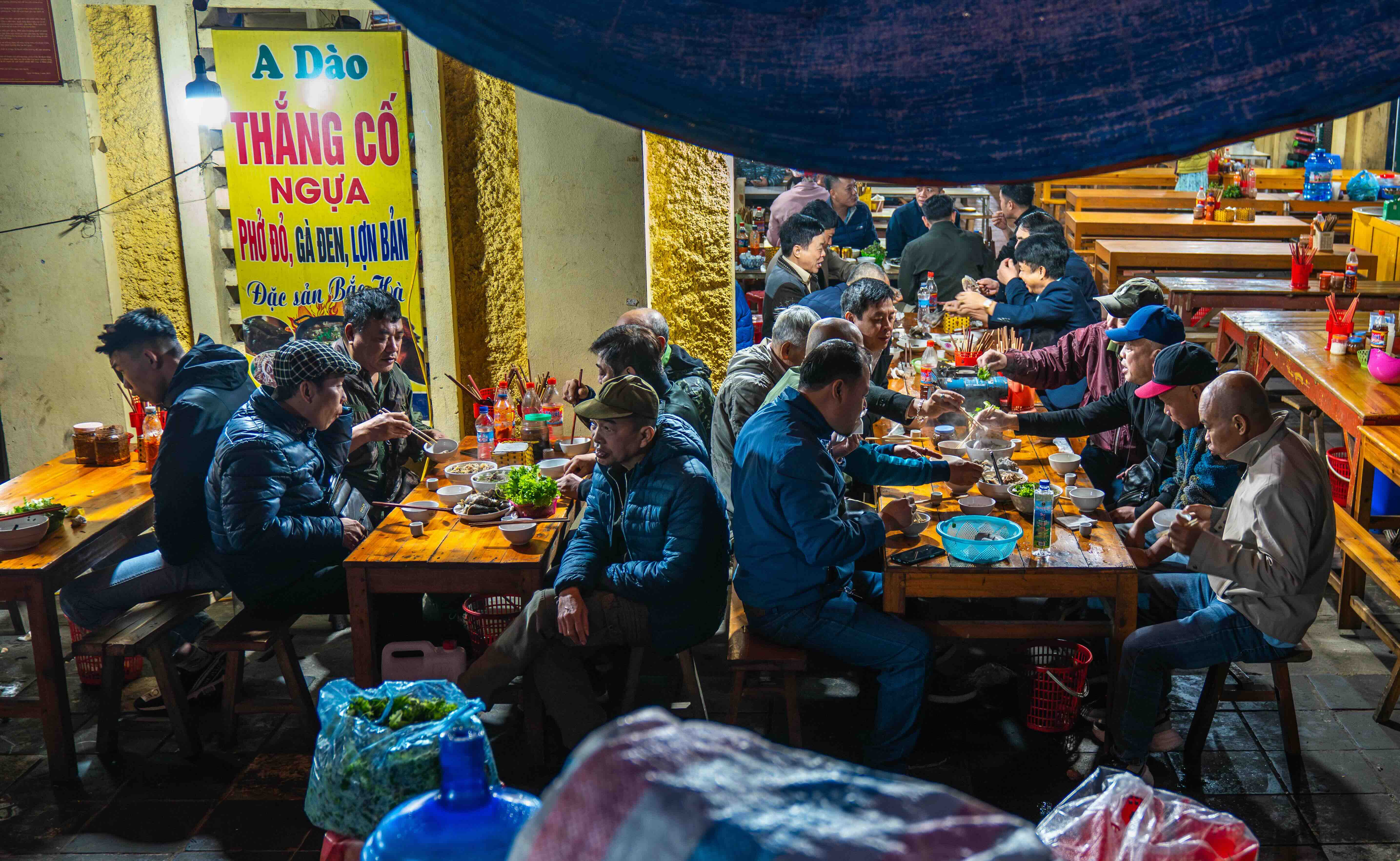
The food court draws the largest crowds of locals and visitors. Since the market only convenes on Sundays, it is a chance for old friends to reunite, share stories, and enjoy rustic dishes in the morning chill. From 4 or 5 a.m., steam rises from rows of pots and pans, filling the air with warmth and the scent of cooking. Here, local men gather around small, low tables, savoring specialties in a lively, friendly atmosphere.
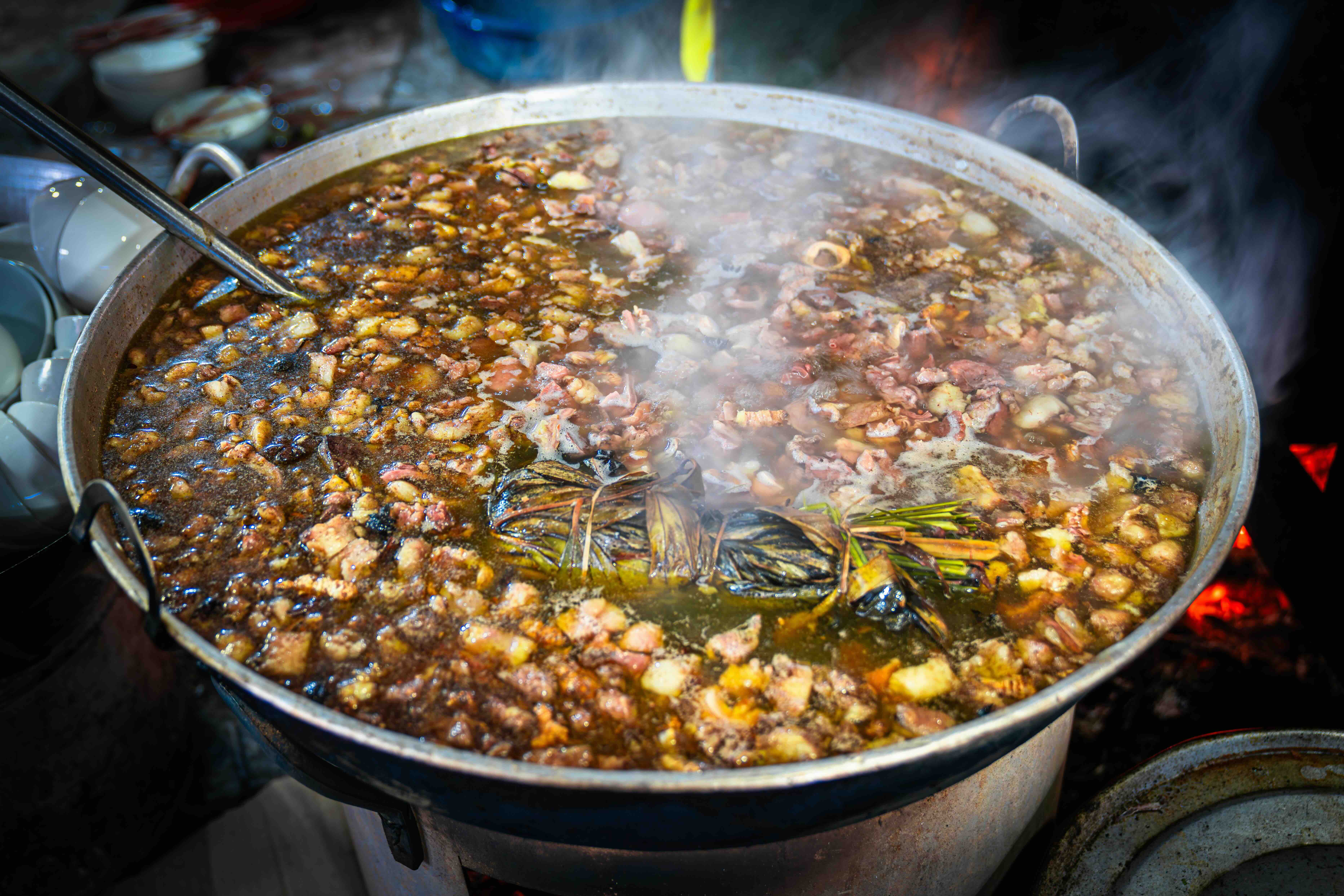
An indispensable dish in the Northwest Highlands, especially at market gatherings, is thang co – a stew made from horse or beef offal simmered with black cardamom, lemongrass, ginger, and mountain spices until its rich aroma fills the air. Other beloved dishes include black chicken, steamed cornmeal, five-color sticky rice, and sour pho with a tangy dipping sauce. From carefully choosing the ingredients to balancing the spices, each dish tells a story about the culture of the plateau.
Distilled from local yellow corn and forest-leaf yeast, a small cup of Ban Pho corn liquor holds the fiery, fragrant essence of the mountains. One simple toast, and the line between stranger and friend dissolves, the warmth of highland hospitality flowing freely from cup to heart.
As the sun rises, the mist slowly lifts, and golden light floods the market, illuminating the vibrant stalls and the vivid hues of brocade. The atmosphere grows livelier as tourists from near and far arrive. Fragrant steam from the food stalls mingles with the cool mountain air, enveloping the market in the festive spirit of the White Plateau.
Visitors can reach Bac Ha by coach from Hanoi or Lao Cai. The region is especially enchanting in winter and spring, when plum and pear blossoms blanket the mountains in white. Bac Ha Market is more than a place of trade – it is a cultural journey, a chance to lose oneself in the colors of brocade, the flavors of highland cuisine, and the warmth of mountain hospitality. Step into Bac Ha Market just once, and the hues of brocade, the taste of thang co, and the sincerity of its people will linger long after, capturing the rustic spirit of the White Plateau.