Story: An Nhien
Photos: Amachau
Join Heritage in meeting Ikebana artist Do Thi Thu Phuong in Hanoi.
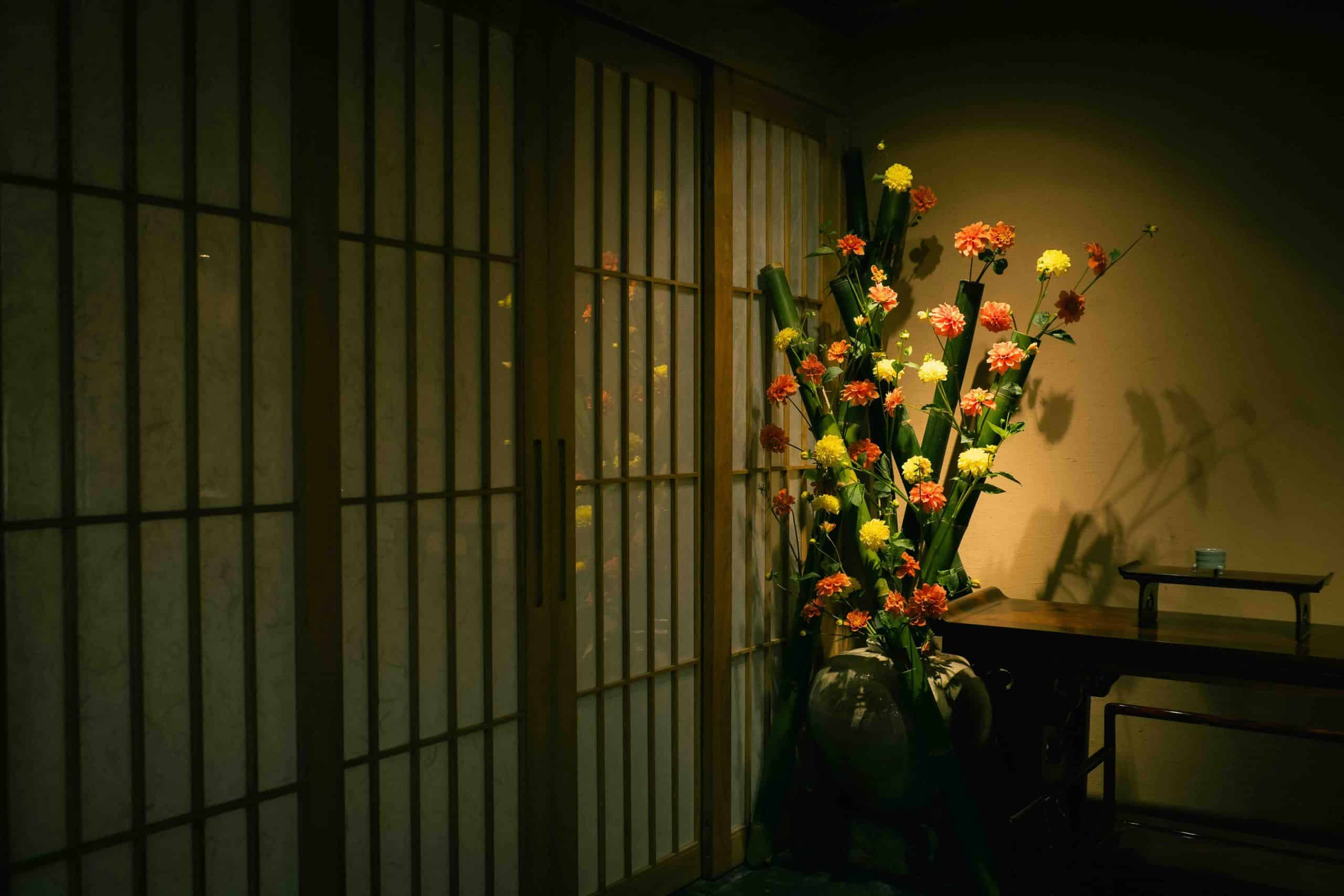
In a space with a distinct East Asian character beside West Lake in Hanoi, a floral display inspired by the Japanese art of Ikebana takes shape, using Vietnamese materials such as bamboo, peach blossoms, and dahlias. The result is a calm yet lively expression of spring.
Within this setting, Do Thi Thu Phuong – an Ikebana artist of the Mishoryu school – speaks of flowers in a calm, measured voice. After more than eight years devoted to this art, she sees flower arranging as more than an art form. For Ms. Phuong, it’s a path of spiritual cultivation, allowing people to learn to listen to nature and themselves.
Please tell us about the journey that led you to Ikebana.
I did not come to Ikebana through Japan, but through a long journey with East Asian culture. After finishing high school, I went to China to study. During those years, I spent a great deal of time exploring the culture, aesthetics, and arts of China’s historical dynasties. The more I learned, the more I realized that there is a profound East Asian spirit that transcends national boundaries.
By chance, at a flower arrangement exhibition, I met Master Keiho Hihara – the tenth-generation head of the Mishoryu school, one of Japan’s oldest Ikebana traditions. When I saw his works, I was drawn in by their vitality and the powerful sense of connection with nature. He had not arranged the beauty, but rather revealed the beauty that existed – alive and breathing. I consider it a fated encounter that came at the right moment, when my understanding of East Asian culture had matured enough for Ikebana to become the path I chose to take.
What made you commit to Ikebana long-term?
For me, Ikebana is not an art of visual composition, but a path of spiritual cultivation. Each time I arrange flowers is a moment to slow down, observe my inner state, and learn patience. I can spend hours, even an entire night, arranging flowers – simply to listen to and feel the inherent nature of the materials.
Every branch and blade of grass carries its own energy, and the flower artist also carries a personal energy that reflects their aesthetic sensibility. When the energy of the plant materials interacts with the artist’s energy, a new life is formed – that is the artwork. This slow, quiet process allows me to deepen my sense of the connection between humans and nature. Ikebana, therefore, does not exist only in a vase; it gradually permeates daily life, becoming a way of living slowly and with depth.
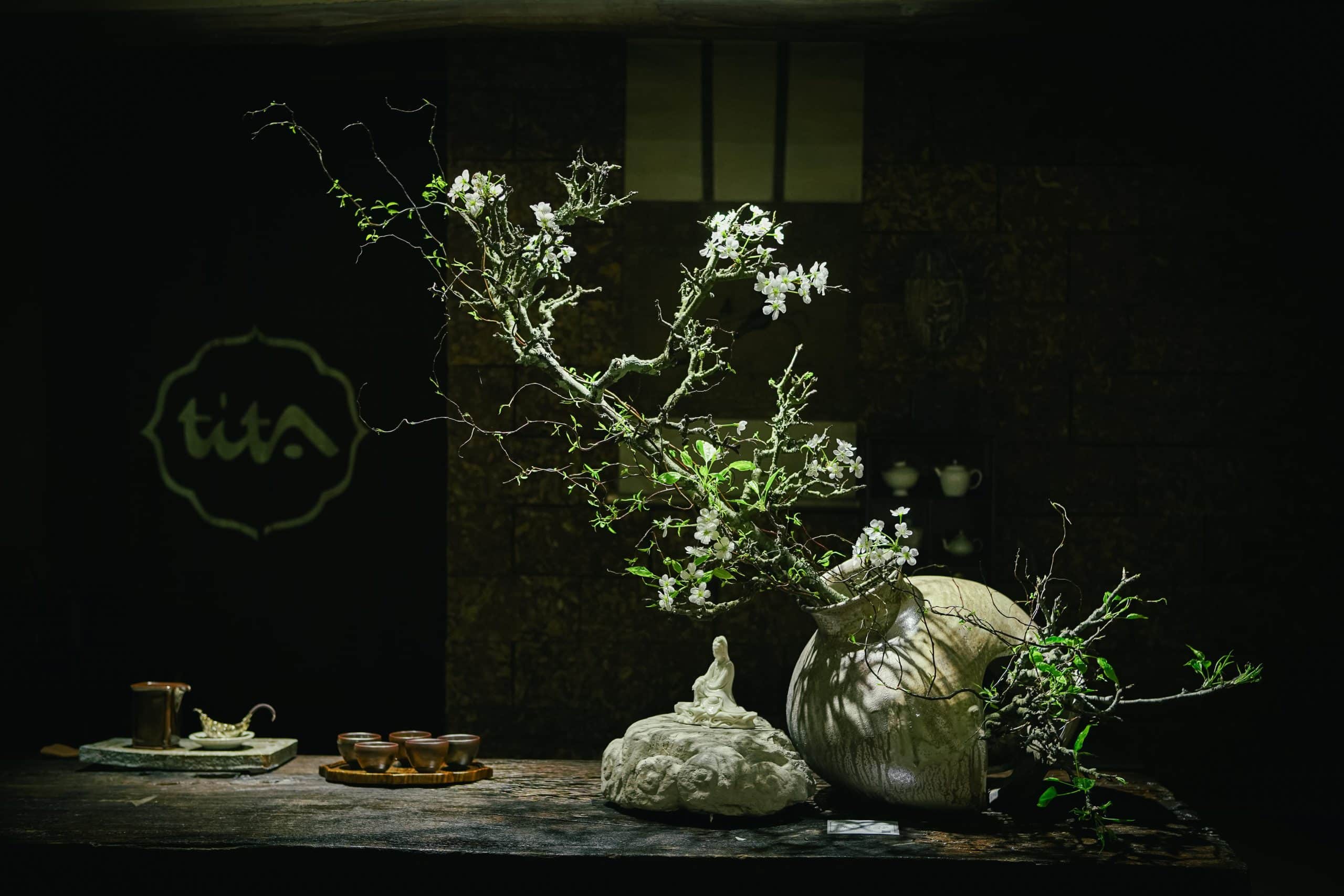
You never seem to repeat your artwork. How does that process begin?
To create a piece, I often spend a long time thinking – not about what kind of flowers to arrange, but about what emotion I wish to express. I actually enjoy this process of inner listening and nurturing my own emotional state.
Each time I arrange flowers, my state of mind is different, and the condition of the flowers is different as well. A slight change in a curve or a shade of color can completely alter the feeling. And sometimes, even after careful contemplation, once I select the materials and directly sense their vitality, the final work turns out to be what nature has created.
Do you “converse” with flowers?
Perhaps “converse” sounds a bit exaggerated. In reality, I quietly observe and sense each nuance of color, direction of growth, and curve, seeking the most beautiful angle of each branch and bloom. When one is sufficiently still, it becomes clear that every flower has its own refined and tender character. That is the positive energy of nature. The flower artist is simply the one who perceives it and uses techniques to express it as honestly as possible.
How does using a lot of Vietnamese floral materials influence Japanese Ikebana?
Materials carry the essence of the land where they grow. Vietnamese flowers and plants absorb the sunlight, wind, and soil of this place. I, too, was born and raised within that same current of energy, so in terms of culture, awareness, and thought, I am Vietnamese. When a work carries a Vietnamese soul and uses Vietnamese materials, even with the same techniques, the spirit of the piece is entirely different.
For example, nandina, pear branches, and plum branches also exist in Japan. But when they grow in my own garden or in the mountains of the Northwest, their vitality is completely different. To sense that difference requires working with plant materials extensively and practicing for a long time. When the character of the materials meets the character of the arranger, that interaction creates a very personal imprint.
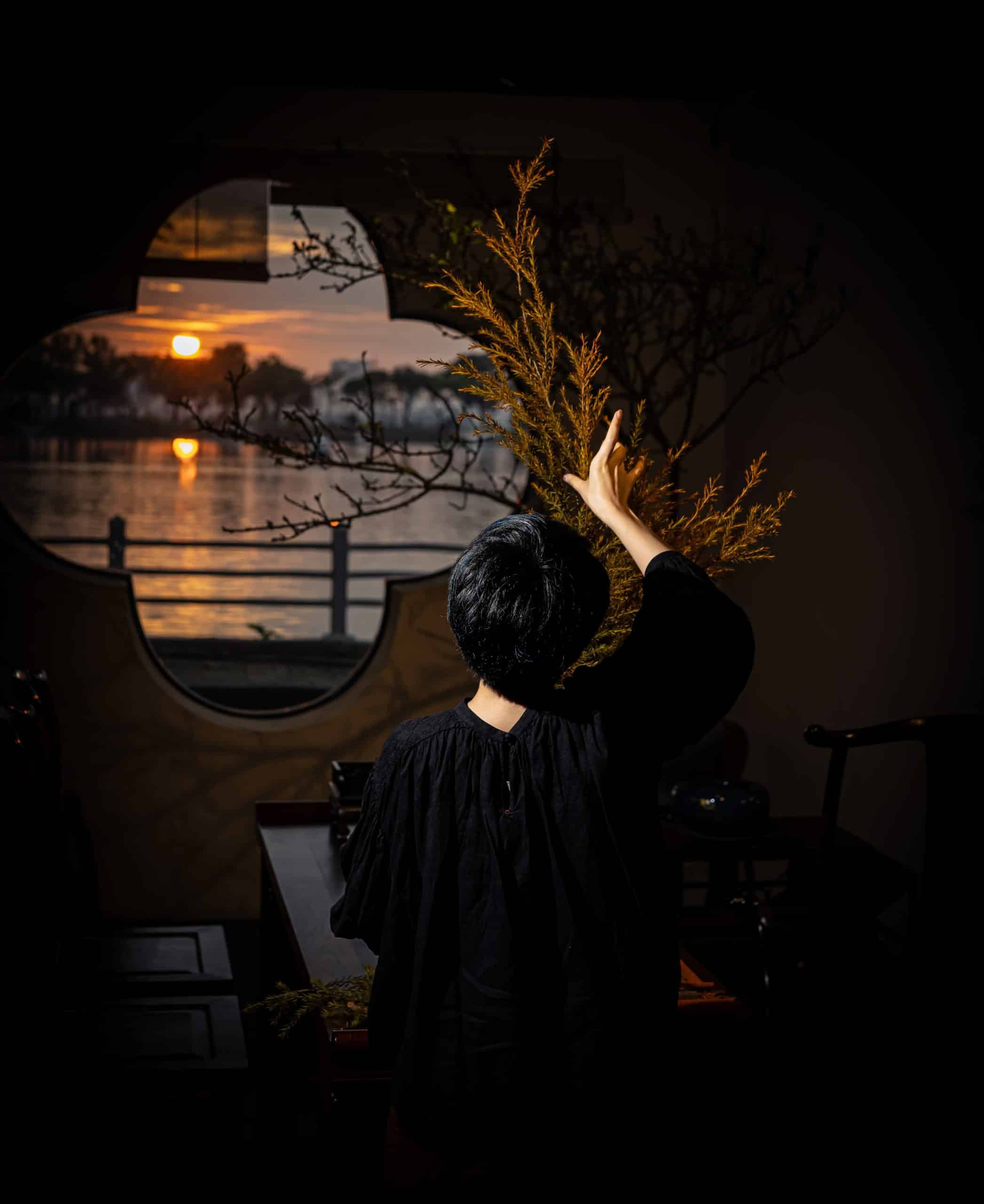
Arranging flowers gives you moments of stillness and self-reflection. What made you decide to share this art with others?
By nature, I enjoy researching, working, and “playing” on my own. But I find that I grow more, and life feels more meaningful when I practice. Flower arranging nurtures emotions and boosts sensitivity – something everyone needs, especially artists. When I share a work, and people find it beautiful or feel moved, both the viewer’s and the creator’s emotions are enriched. In that way, beauty spreads. I have organized small exhibitions so more people could come and appreciate the works. But sometimes it is very simple: arranging a single vase of flowers and sending it to a friend who loves flowers, just to enjoy it together and share joy. Nothing more than that. (Laughs)
With this installation inspired by spring, what do you hope to convey?
Spring in a floral work does not lie in brilliant colors or elaborate forms. Spring is vitality, a beginning, and a sense of hope quietly in motion. If, upon looking at it, one feels life and new energy beginning to sprout, then spring has already arrived.