Advertising


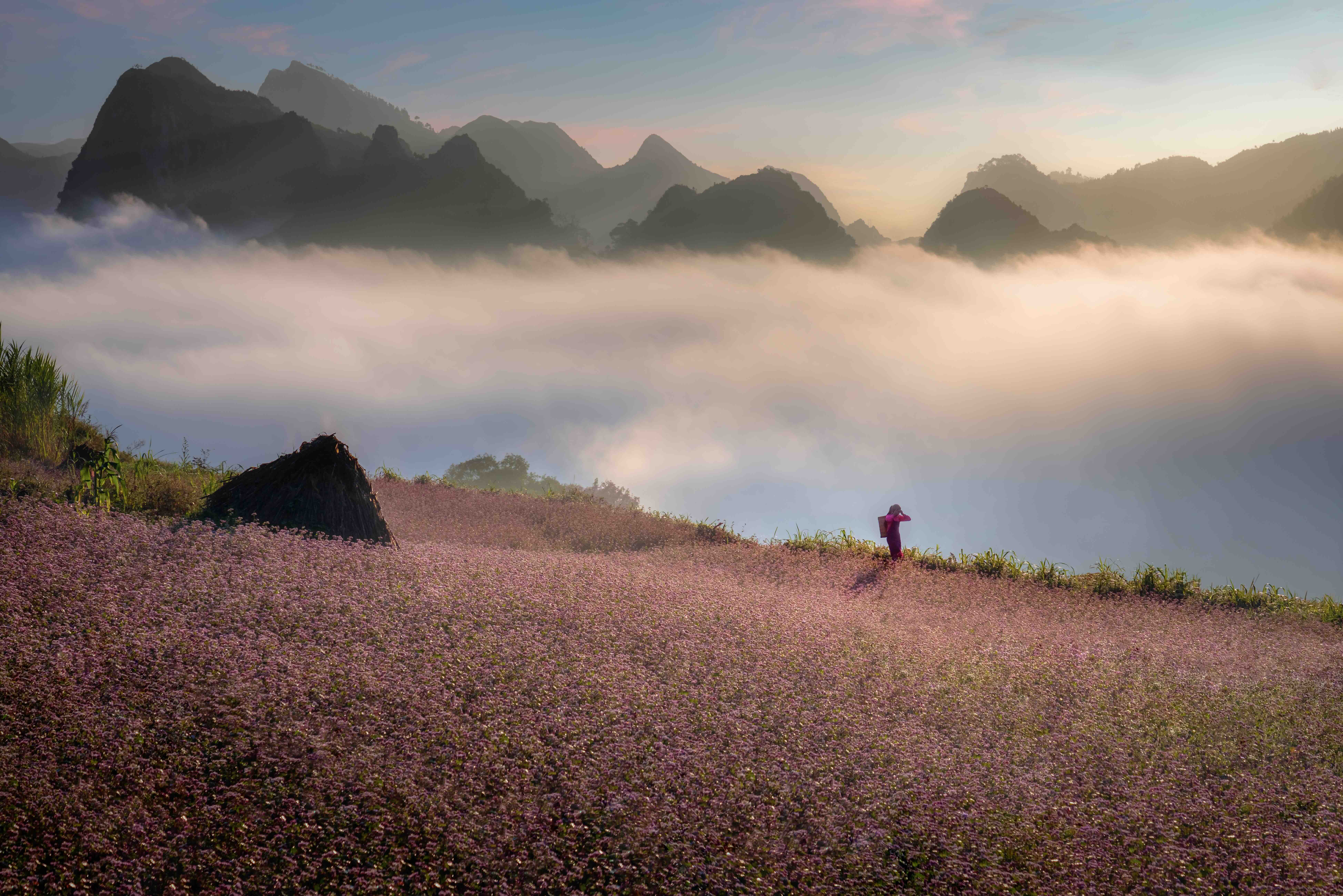
The dry weather and clear blue skies of early winter provide ideal conditions for the flowers to reveal their beauty. The most enchanting time is early morning, when dew still clings to the leaves and the flower-filled valleys seem to drift like misty clouds in the dawn light. By late afternoon, the soft, golden sunlight spreads over the hills, making the delicate blossoms stand out; the scene is touched with the quiet solitude of the borderlands.
Today, buckwheat is widely grown in the communes of Dong Van, Quan Ba, Yen Minh, and Meo Vac. During the peak blooming season, travelers can easily spot sweeping valleys of flowers along National Highway 4C – through Quan Ba, Sa Phin, the foot of Ma Pi Leng Pass, around Lung Cu Flag Tower, and in the Dong Van Old Quarter. The scenery is especially striking on the vast Suoi Thau Plateau in Xin Man commune, western Tuyen Quang, and along the road leading up to Lung Cu Flag Tower, where deep abysses and layered mountains heighten these fragile flowers’ delicate beauty.
The buckwheat season in Tuyen Quang offers not only scenery to admire but a full journey of the senses: gazing at flowers blooming against the majestic rocky mountains, breathing in the scent of herbs and blossoms in the early winter wind; tasting the nutty richness of buckwheat cakes, the sharp spice of buckwheat wine, and the mellow sweetness of buckwheat honey; and feeling the fragile yet enduring petals between one’s fingers. Together, these sensations weave the flower season into a complete experience – an invisible thread linking visitors with the nature, culture, and people of the Tuyen Quang Stone Plateau.
This year, cold winds are expected to arrive earlier than usual – a sign that the flowers will bloom on time. It is more than the coming of a flower; it marks the turning of a season, stirring joyful anticipation, like an annual rendezvous between nature and humankind in this frontier land.