Story: Kincoi
Photos: Amachau

Discover four sacred sites – and a path to happiness – in the Himalayan kingdom of Bhutan.

There exists a place where the clock seems to move more slowly, where even the gentlest steps lead to fulfillment. That place is Bhutan – a small kingdom tucked away in the Himalayas. Here, people have chosen a different rhythm from the fast pace of the modern world, living by quiet, steadfast, deeply spiritual values. Nowhere is this philosophy more tangible than in the country’s temples, where time seems to pause and each day becomes a step inward on the pilgrimage of the soul.

In this last stronghold of Vajrayana Buddhism, life unfolds in reverence and calm. Each day, pilgrims and travelers arrive in search of meaning, yet the temples remain sanctuaries where locals entrust their daily rhythm to the divine. Children follow their parents around the stupas, elders lean on canes to turn prayer wheels, and young men and women bow with folded hands before Buddha’s image. There is no rush, no strain – only calm, deliberate movement, like the steady flow of a mountain stream sinking into earth. For the Bhutanese, devotion is as natural as breathing.

It is no surprise, then, that temples and monasteries are plentiful across the kingdom. A short 10 or 15-minute walk through any town or village will likely lead you to a place of worship where people wait silently, whispering Om Mani Padme Hum as they take turns to spin large prayer wheels. In these sacred spaces, visitors often find themselves stilled by the smallest sensations – the soft hum of wind threading through wooden beams, or the gentle chime of a bell accompanying a prayer.

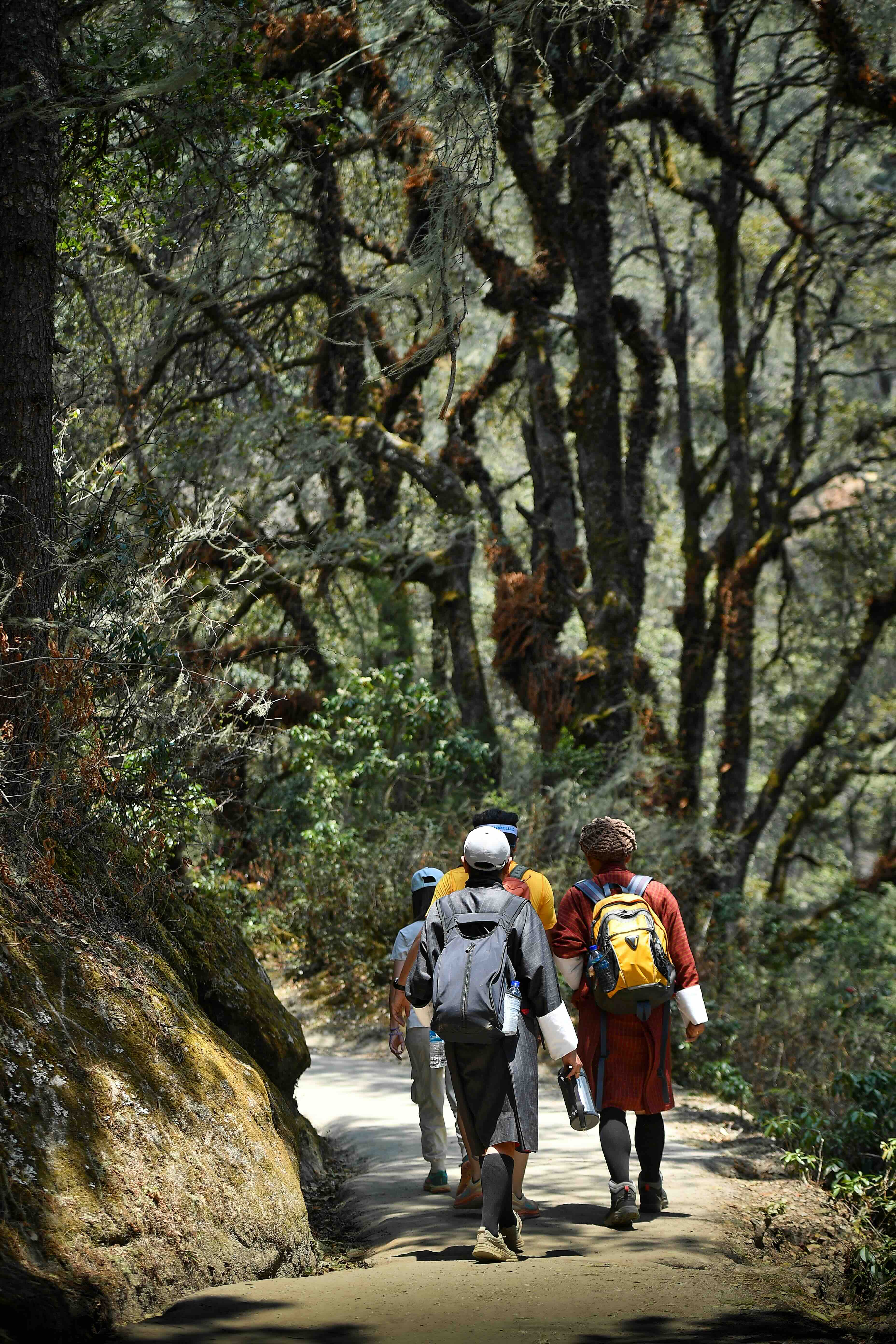
Pilgrims on the steep path to Taktsang – the Tiger’s Nest

Taktsang – the Tiger’s Nest

Known as Taktsang, or the Tiger’s Nest, Bhutan’s most iconic monastery clings precariously to a cliffside over 3,000 meters high. Legend tells how Guru Rinpoche – the revered sage who brought Buddhism to Bhutan – flew here on the back of a tigress and spent months meditating in a cave. From that act of devotion, Taktsang was built, becoming a symbol of spiritual perseverance and strength.

The climb to Taktsang is not easy: steep stone paths, dizzying switchbacks, and thin mountain air test every traveler. Yet the journey itself carries a message: only through effort can one truly savor tranquility. Sitting before the monastery, listening to the wind chimes ring across the valley, one realizes that “living slowly” is not about stopping but about moving mindfully and turning the journey itself into the reward.

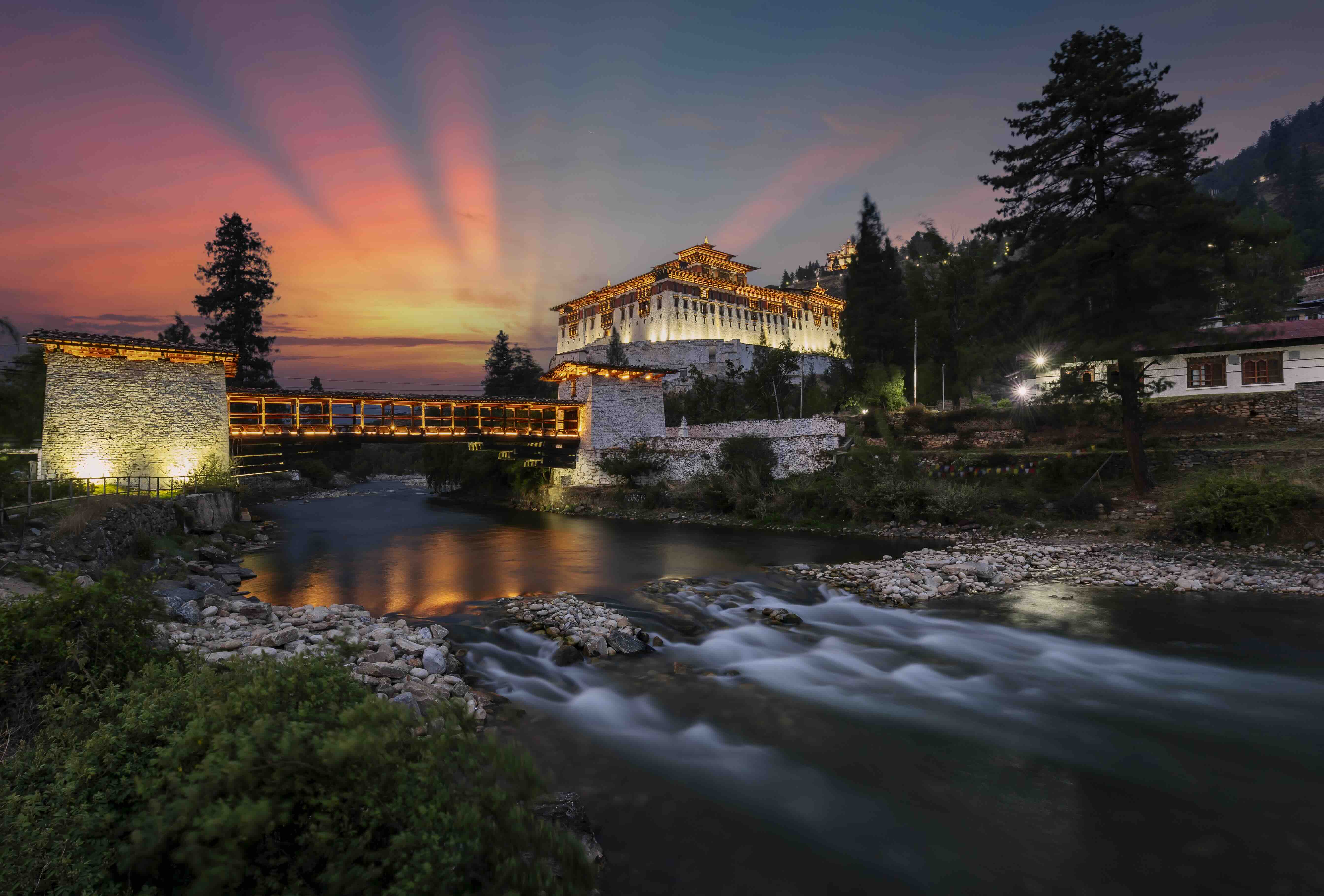
Rinpung Dzong is bathed in extraordinary light

Rinpung Dzong – the Fortress of Light

In the Paro Valley, with its long, whitewashed walls and intricately carved wooden roofs, Rinpung Dzong stands majestic. Locals believe it is the “Fortress of Light,” a place that balances good and evil, or the light and shadow within the human spirit. The Dzong serves as both a temple and the administrative heart of the region. Each spring, the Paro Tsechu Festival fills its courtyards with masked dances, drums, and sacred chants as thousands gather in celebration.

Here, the philosophy of slow living comes to life. People spend whole days walking around temple courtyards, brushing their hands against cool stone walls, and listening to long horns echo across the valley. To them, happiness lies not in finishing quickly but in inhabiting each moment completely.

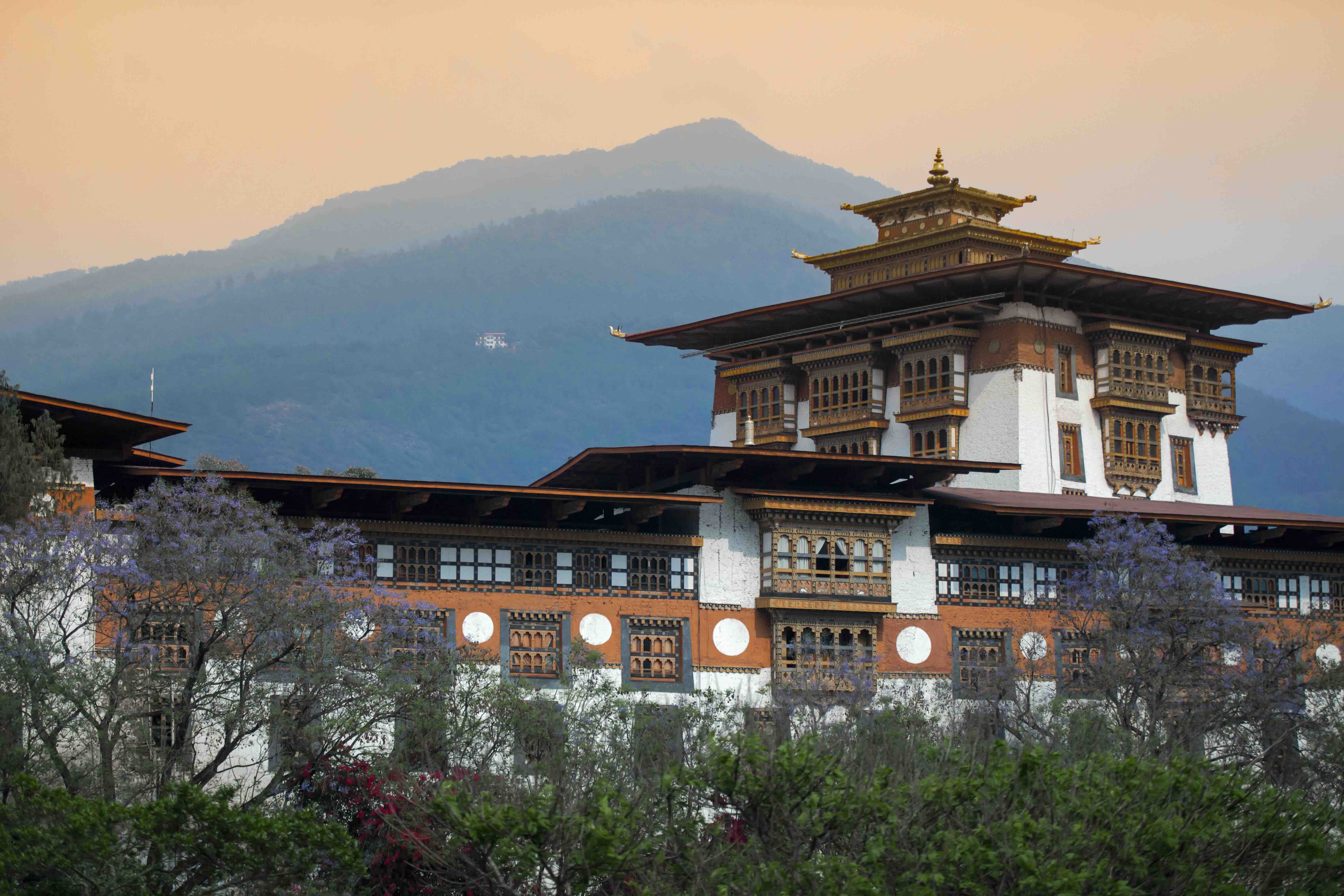
The serene landscape surrounding Punakha Dzong

Punakha Dzong – Where Blessings and Prosperity Meet

If Taktsang represents endurance and Rinpung Dzong balance, then Punakha Dzong stands for harmony and abundance. Nestled between two rivers – the Pho Chhu (Father River) and the Mo Chhu (Mother River) – it mirrors the union of yin and yang, of nature and humankind. Locals believe their confluence brings blessings, fertility, and prosperity to the land. Once the seat of Bhutan’s royal government, the monastery remains a place of deep spiritual significance.

Crossing the wooden bridge into Punakha Dzong, I heard the rush of the twin rivers below, a vivid reminder that here, humans do not live apart from nature but move in rhythm with it. This harmony is the source of Bhutan’s quiet, enduring peace.

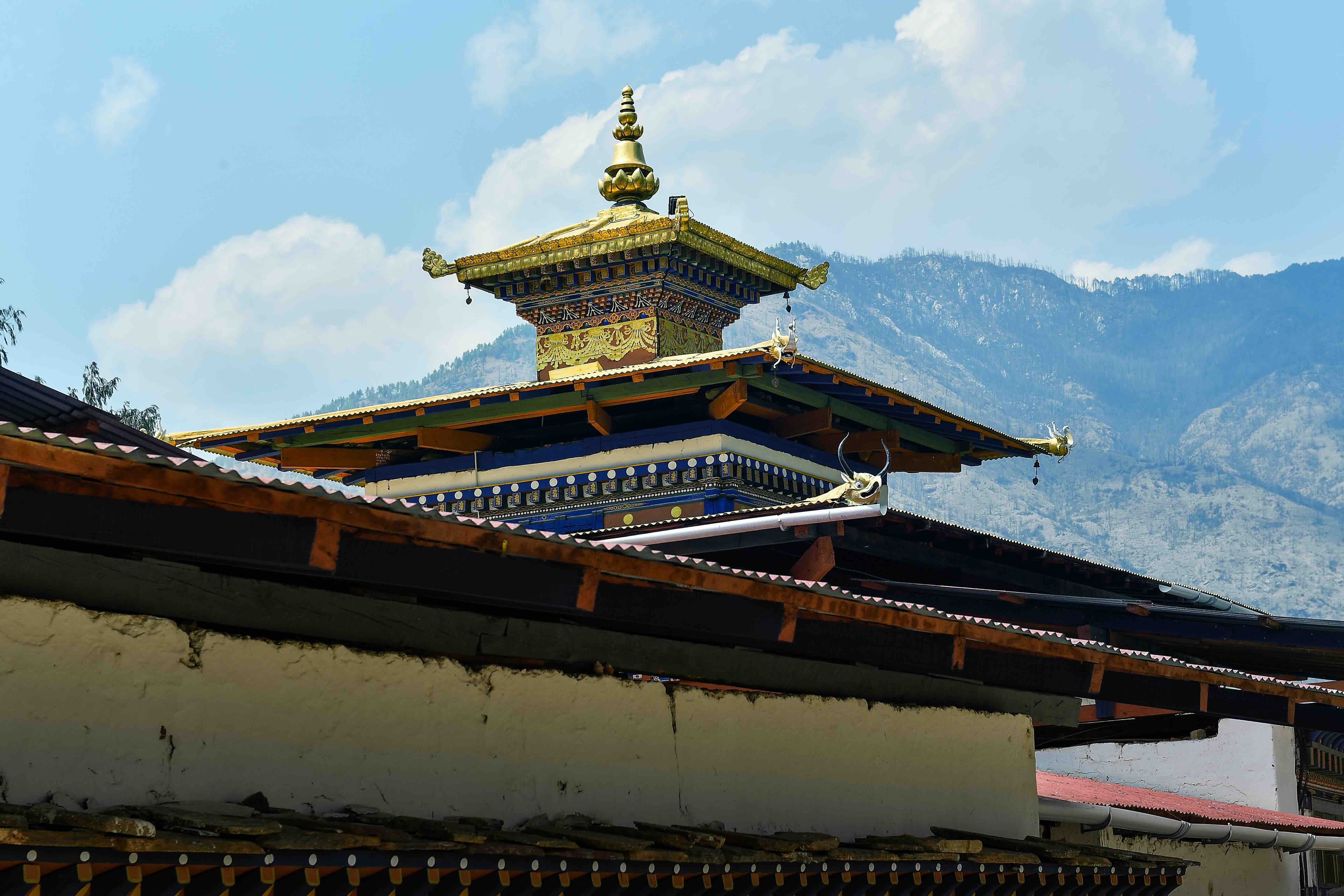
The golden multi-tiered roofs of Kyichu Lhakhang in the Paro Mountains

Kyichu Lhakhang – the heart of Bhutanese Buddhism

Among Bhutan’s oldest and most revered temples, Kyichu Lhakhang dates back to the seventh century. Locals call it the “Heart of Bhutanese Buddhism,” believing it anchors the country’s spiritual energy. Families often bring their children here to pray for blessings, trusting in the temple’s pure and ancient energy. As I circled the stupa, I caught sight of elderly devotees, their eyes glowing with faith, their trembling hands turning rosary beads with quiet devotion.

Four temples, four stories – each revealing a facet of Bhutan: perseverance, balance, harmony, and faith. Together, they form a portrait of a nation that finds strength in serenity.

What is most remarkable about Bhutan is that “slow living” is not a movement or a practice – it is simply a way of being. The Bhutanese do not manage time; they dwell within it. They do not chase opportunities; they understand that happiness is not a distant reward, but something already here for those who pause to cherish it.

Standing before a temple gate, I once watched a prayer wheel spin gently in the wind, its quiet rhythm whispering a truth: happiness is not found in speed, but in the stillness of our hearts. Perhaps that is Bhutan’s secret as the “Kingdom of Happiness” – they do not race toward the future, but walk slowly enough to embrace the present. Perhaps, if we dare to slow down, we too might find the most peaceful version of ourselves.