Story: Nguyen Phuoc Bao Dan
Photos: Le Trung
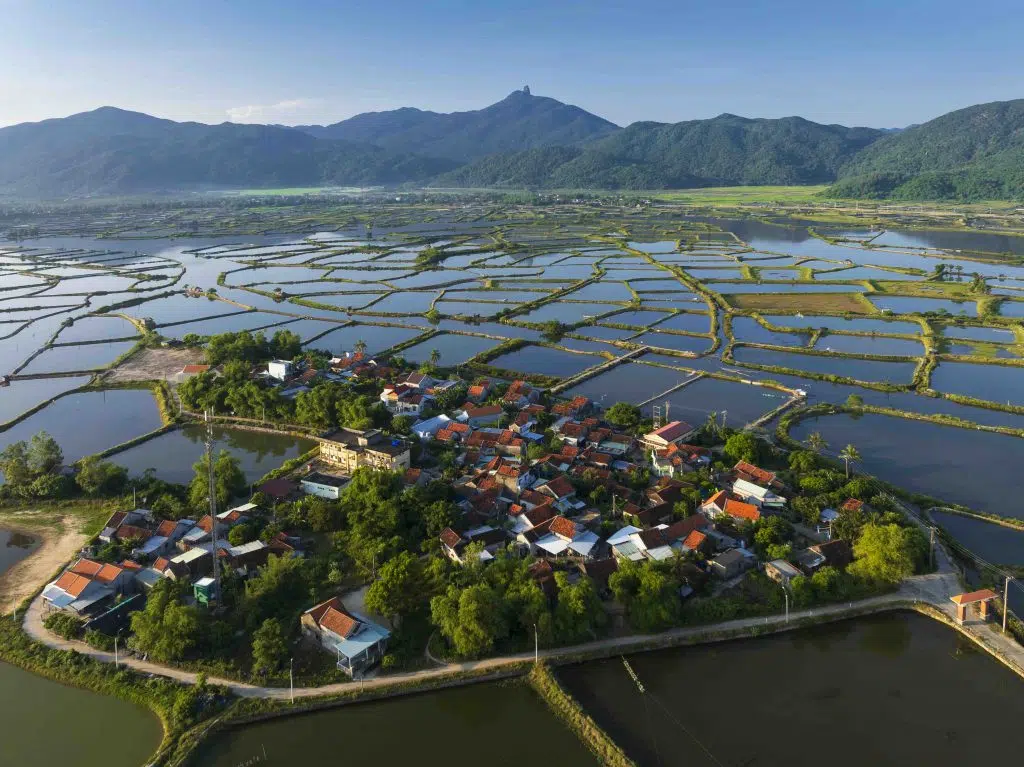
Flying over the estuary of the Ban Thach River on Vietnam’s South-Central Coast, one sees clusters of red-tiled roofs nestled beside white sandy beaches, these seaside villages home to people who have lived in harmony with the sun, wind, and ceaseless rhythm of the waves for generations.

Living and thriving by the sea
Founded by fishermen who settled near the Da Nong Estuary, where the Ban Thach River meets the sea, Phu Tho Village gradually took shape as a coastal community sustained by the ocean’s bounty. Over time, it grew into three hamlets – Phu Tho 1, Phu Tho 2, and Phu Tho 3 – yet to locals it has always been known as “Lo Kho Ba Trai”, or simply “Lo Village” (The Kiln Village), now part of Hoa Hiep Ward, Dak Lak Province.
The village earned its affectionate nickname from the fish-boiling kilns past generations built to make ca trung – lightly poached fish that became a staple for coastal communities and a beloved delicacy in many rural Vietnamese homes.
Near Dai Lanh Cape, the easternmost point of Vietnam’s mainland, Lo Village enjoys a prime location and abundant fishing grounds, especially rich in mackerel, frigate tuna, and bullet tuna – the key ingredients for ca trung.
In the past, after each offshore fishing trip, villagers processed their abundant catches in traditional boiling kilns. These conical brick structures resembled rice paper ovens: a large pan of briny water sat on top, firewood burned beneath, and steps on either side provided easy access. Once the fish were sorted, those chosen for ca trung were gutted, filleted lengthwise, arranged neatly in baskets, and lowered into the boiling brine. The entrails were reserved for making fish sauce.
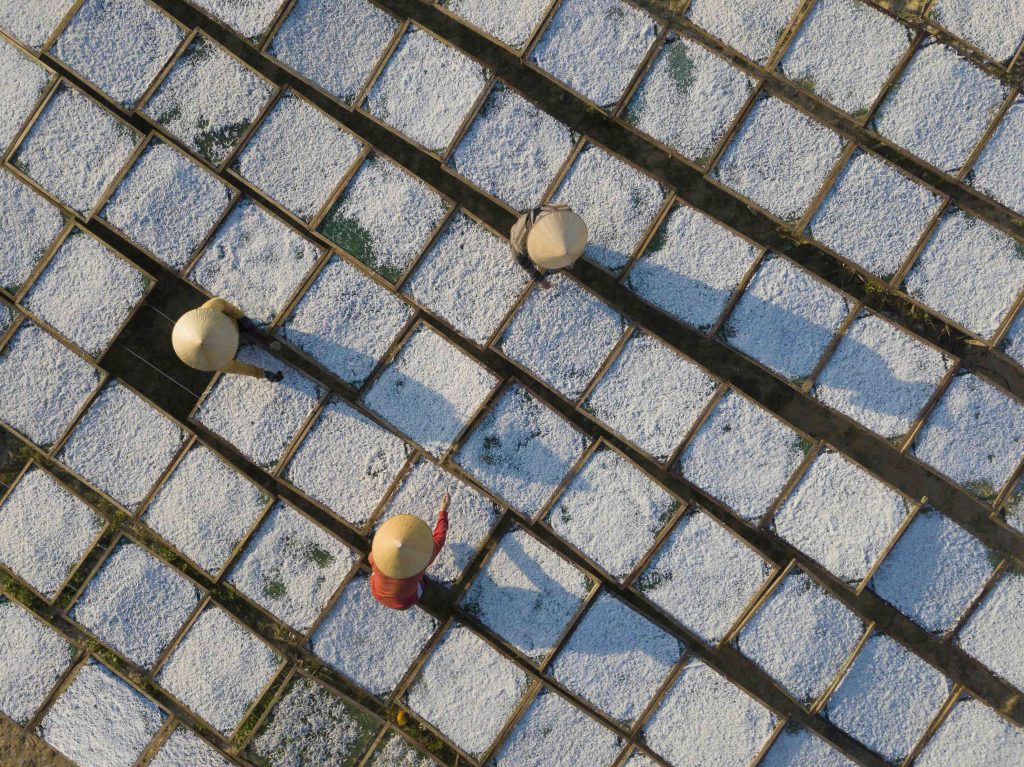
For large kilns, two workers used a carrying pole to lift and dip the baskets. For smaller ones, a single worker balanced baskets at either end of a pole, rhythmically dipping them into the steaming pan. As they deftly tilted their shoulder poles to poach fish, the fishermen resembled rhythmic dancers. Once cooked, the fish was layered in baskets lined with banana leaves and sold to traders who carried this famous dish inlandto be consumed as the source of the iconic dish ca trung cuon banh trang – poached fish rolled with rice paper and herbs.
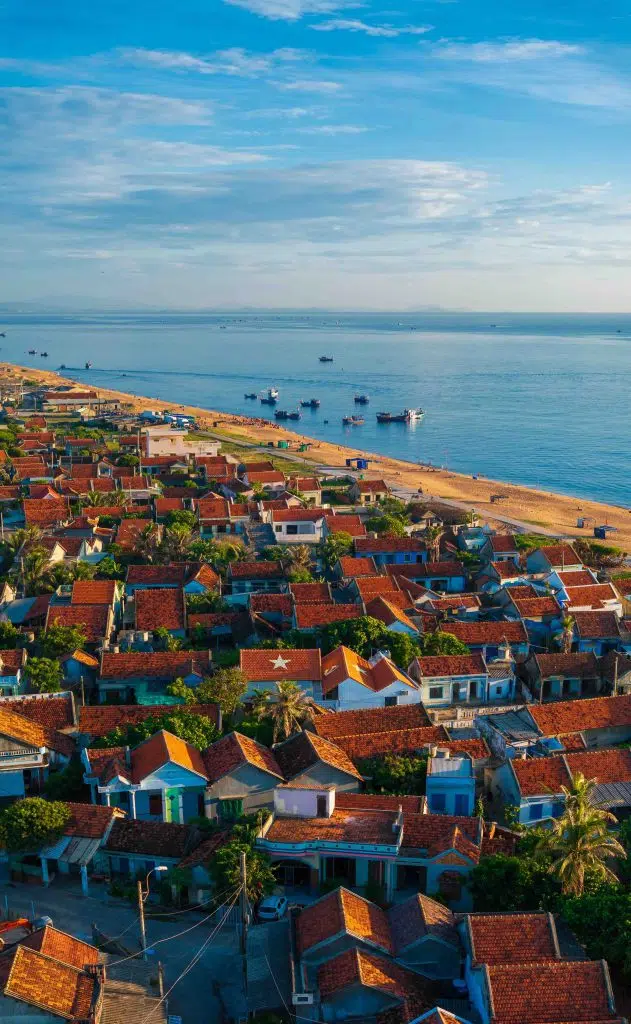
The fish-boiling craft not only sustained livelihoods but also gave rise to the red-tiled roofs that now glow softly against the blue sea, a mark of prosperity built on hard work and the ocean’s generosity.
A charming village of red-tiled roofs
Though simple, Lo Village offers memorable experiences for visitors. Tourists can enjoy authentic coastal dishes like banh xeo he (scallion pancakes), banh xeo muc (squid pancakes), and banh canh he (scallion noodle soup) made with freshly-caught seafood. Early risers can join the lively morning market on the shore or take a refreshing swim in the cool, clear sea.
The village’s beach is a mix of fine white sand and colorful pebbles that shimmer like jewels under the sun, soothing bare feet with a natural massage.
Between May and June of the lunar calendar, the village hosts the lively Cau Ngu Festival – a fishermen’s celebration of gratitude and prayers for calm seas and plentiful catches. The ceremonies – dragon dances, ba trao chants, deity processions, and traditional performances – flow seamlessly into the festivities of boat races, basket rowing, tug-of-war games, and martial arts contests. At night, the sounds of bai choi and hat boi fill the air, alive with cultural pride and community spirit.
Here in Lo Village, the red-tiled roofs are more than part of the landscape – they are a promise of home. For fishermen returning from the open sea, those rooftops gleaming in the misty sunset serve as beacons of belonging. And for travelers who come and go, they offer a warm farewell and an invitation to return. Visit Lo Village to hear the whispering waves and feel the calm of this humble, heartfelt coastal region.