Story: Lan Huong
Photos: Dao Canh

It wouldn’t be Tet in Vietnam’s northern mountains without a range of delicious homemade cakes.

The traditional Northern Lunar New Year lives not only in the blush of peach blossoms or the warmth of family gatherings on the year’s final afternoon, but also in the time-honored cakes lovingly prepared for generations. On mist-covered mountain slopes, beside crackling hearths in highland communities, each batch of leaf-wrapped cakes carries affection and hopes for the coming year. Tet cuisine is more than food – it is the soul of spring itself, where memory, culture, and the flavors of the mountains converge, leaving anyone who tastes it with a gentle ache of longing and nostalgia.

Humpback chung cakes

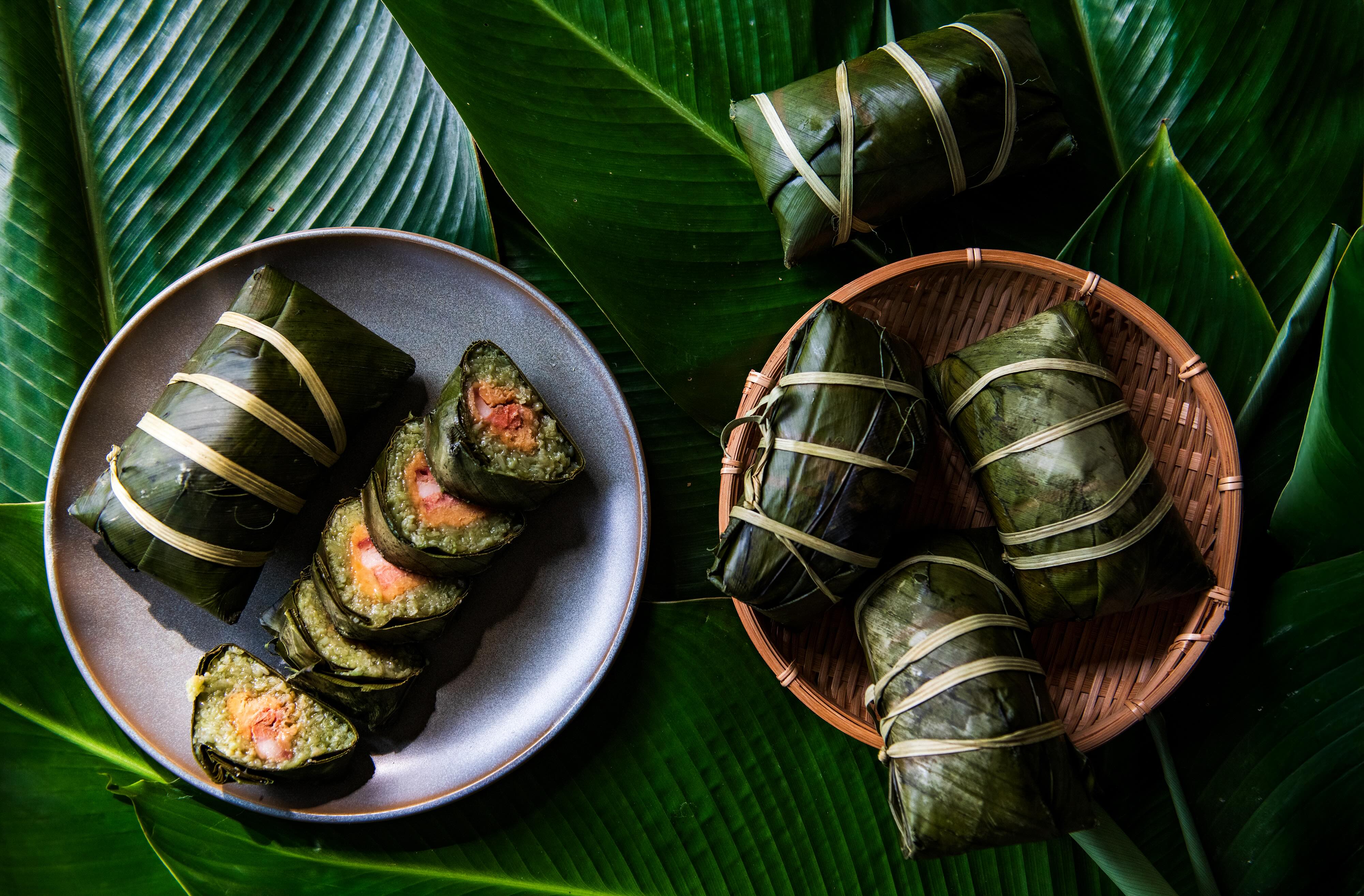
For Vietnamese people, the Lunar New Year is sacred – a time for family reunions and togetherness. While ethnic Kinh people prepare traditional square banh chung, ethnic minority communities in the northern highlands have their own unique version: humpback chung cakes. The ingredients are similar across regions – sticky rice, mung beans, pork belly, pepper, and dong leaves. What sets this version apart is its distinctive “hump” shape. The gentle curve rising in the center resembles the back of a mountain woman carrying a woven backpack.

Humpback chung cakes feature a distinctive rounded shape

Mixing fragrant sticky rice, creamy mung bean filling, and rich lard blended with the warm taste of pepper, the cakes are traditionally boiled over a wood-fired stove for 10 to 12 hours until perfectly tender. These cakes embody the hardworking spirit, creativity, and rustic beauty of highland people during the Lunar New Year.

Black banh chung

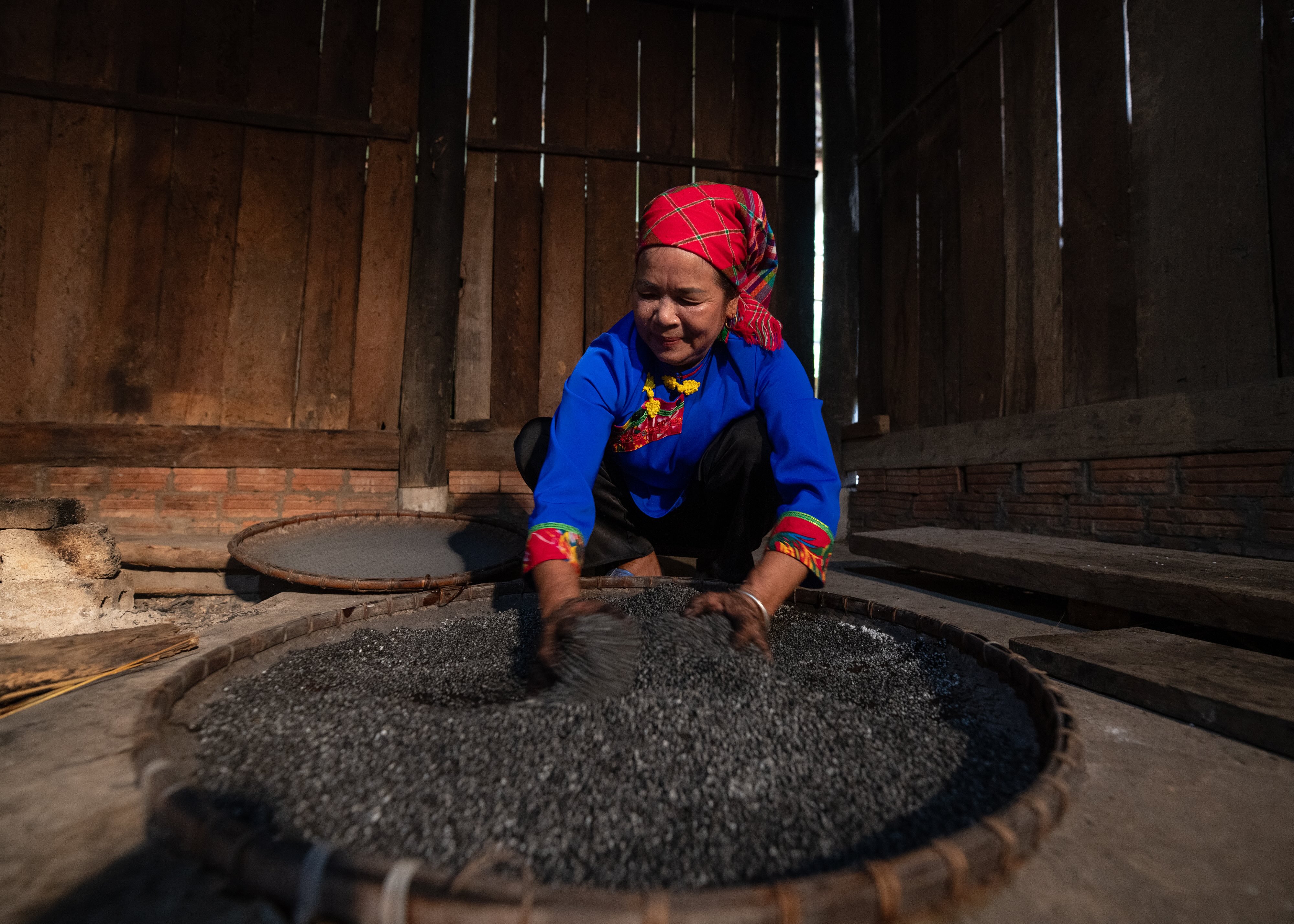
Another distinctive Tet delicacy is black banh chung – a traditional dish cherished by many ethnic groups such as the Tay, Nung, Thai, and some Dao communities. Using familiar ingredients, the only difference lies in the glutinous rice, which is dyed a deep black using ash from plants like nuc nac, xoan muoi, or sticky rice straw. This natural coloring gives these cakes a striking, long-lasting dark hue.

The glutinous rice is dyed deep black using ash from plants

When boiled, the cakes turn glossy black, soft, and wonderfully sticky, with an unforgettably rich, nutty aroma. In the spiritual life of upland communities, black banh chung symbolize gratitude to the heavens and ancestors, as well as prayers for a prosperous and peaceful new year. Thanks to these symbolic meanings, these cakes are essential during the Lunar New Year and major festivals.

Pumpkin cakes

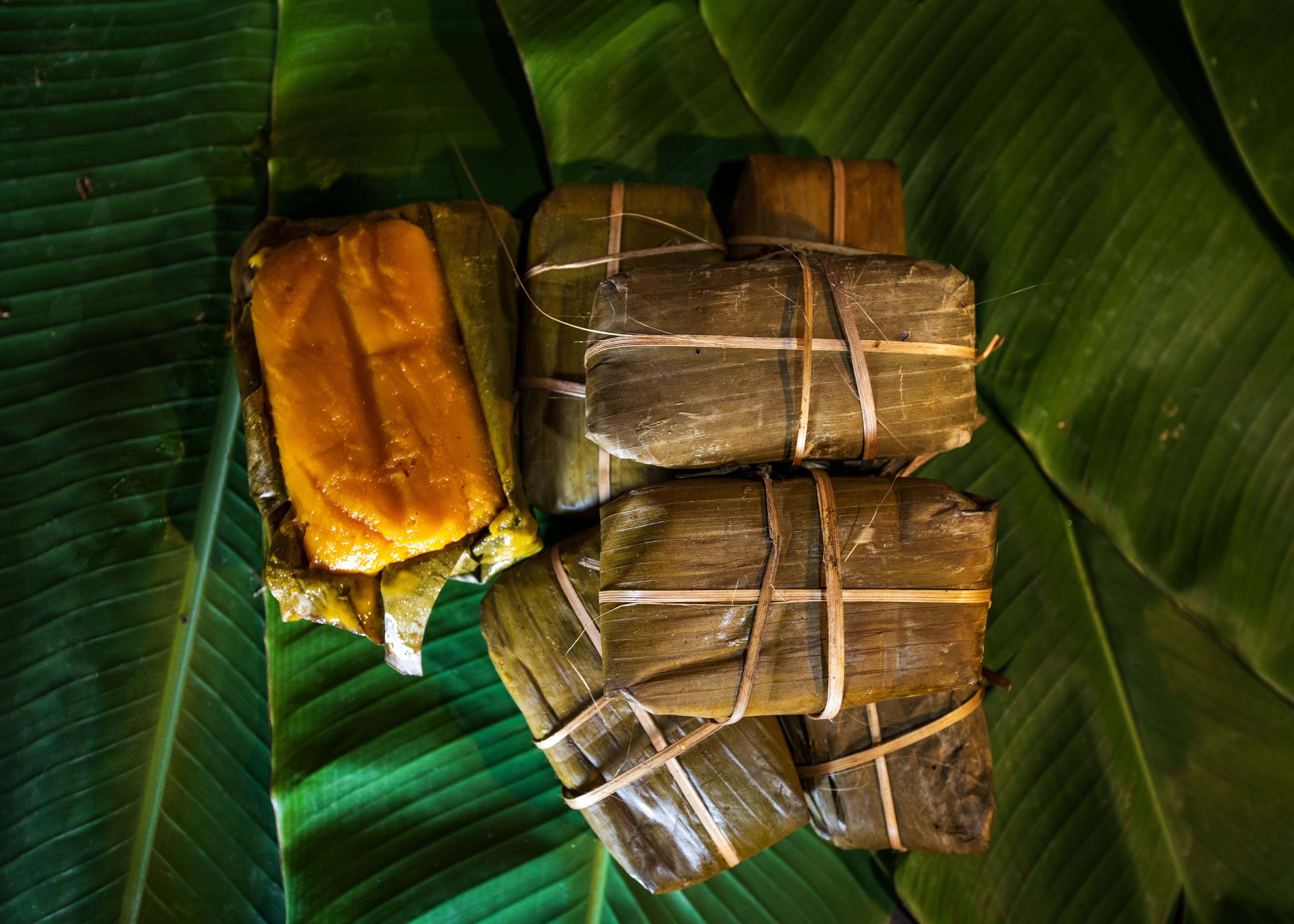
Among the Tay people of Lang Son, pumpkin cake is a rustic yet irresistible traditional treat. The cake is made from glutinous rice flour blended with finely mashed pumpkin. Depending on the region, it may also include a filling of mung beans or minced meat. When steamed, the cakes take on a beautiful golden hue, with the gentle sweetness of pumpkin harmonizing with the rich nuttiness of mung beans and the fragrant chewiness of sticky rice. This beloved cake is commonly served during festive occasions, such as Lunar New Year celebrations, weddings, and engagement ceremonies. These cakes symbolize warmth, prosperity, and familial abundance.

Pumpkin cakes wrapped in dong leaves and steamed to perfection

Mugwort leaf cakes

Mugwort leaf cakes (also known as mugwort sticky rice cakes) are a traditional delicacy of Tay and Nung ethnic communities in Lang Son. They are made mainly from glutinous rice and mugwort leaves, an aromatic ingredient valued not only for its fragrance but also for its health benefits. The filling typically consists of roasted sesame mixed with cane sugar or crushed peanuts, creating a gently sweet and nutty flavor.

This cake is made year-round, but it is especially common during the Qingming Festival, Lunar New Year, spring festivals, and celebrations of the new rice harvest. For people in the northern highlands, it is a heartfelt gift, often given to relatives and friends as a gesture of warmth and respect.

Ash water sticky rice cakes

Ash water sticky rice cakes (also known as banh gio, banh nang, or cooc mo) are a familiar traditional treat for many ethnic groups, including Tay, Nung, Thai, and Kinh people. The cake is made from glutinous rice soaked in lye water extracted from medicinal herbs, wrapped in chit leaves or dong leaves, then boiled until the starch becomes translucent. Once unwrapped, the cake reveals a soft, elastic texture with a smooth, amber-like golden hue. These cakes are best enjoyed with molasses, which adds a refreshing sweetness.

These cakes often appear on full-moon days, the first day of the lunar month, and especially during the Doan Ngo Festival, symbolizing purification, good health, and peace.

These humble cakes are more than just festive delicacies. Full of memories and heritage, they are a thread connecting people to their roots. After every journey, these cakes are small heartfelt gifts for loved ones and friends, their simple flavors warming the soul of anyone who tastes them.