Story: Le Anh
Photos: Ly Hoang Long
Believing in deities and ancestors who live in the otherworld, Vietnamese people have long used incense as a spiritual bridge to express their sincere reverence. The delicate smoke and pleasant fragrance fill worship spaces, enhancing the sense of sanctity and guiding people back to pleasant memories and faith in good things.
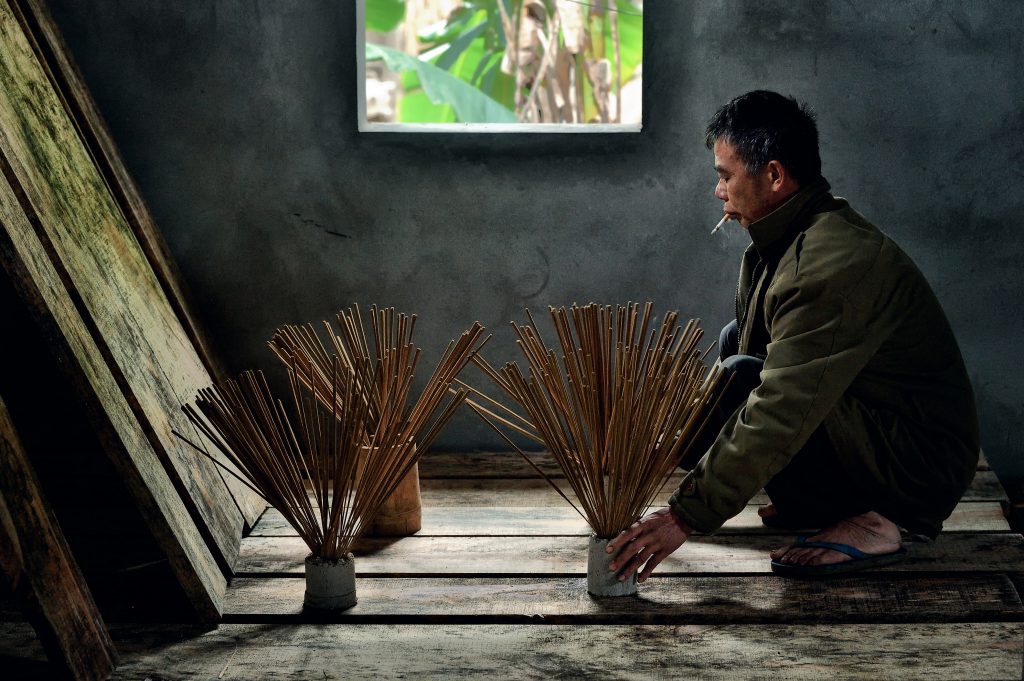

Incense sticks that serve the spiritual life of Vietnamese people are made in many traditional craft villages across this S-shaped land. From the North, through the Center, to the South, every region boasts centuries-old incense-making villages. Standouts include Quang Phu Cau in Ung Hoa district, Hanoi; Choa in Yen Phong district, Bac Ninh; Cao Thon in Hung Yen city; Dong Khe in Hoang Hoa district, Thanh Hoa; Thuy Xuan in Hue city; Quan Huong in Thang Binh district, Quang Nam; and Le Minh Xuan in Binh Chanh district, Ho Chi Minh City. In Cao Bang province in the Northeastern mountains, for decades, people in Phia Thap village in Quang Hoa district have been using local herbs to make incense.
During the months leading up to Tet, villagers in Phia Thap get busier, especially the ethnic Nung people. Everyone from children to adults to elders participates in the incense-making process.
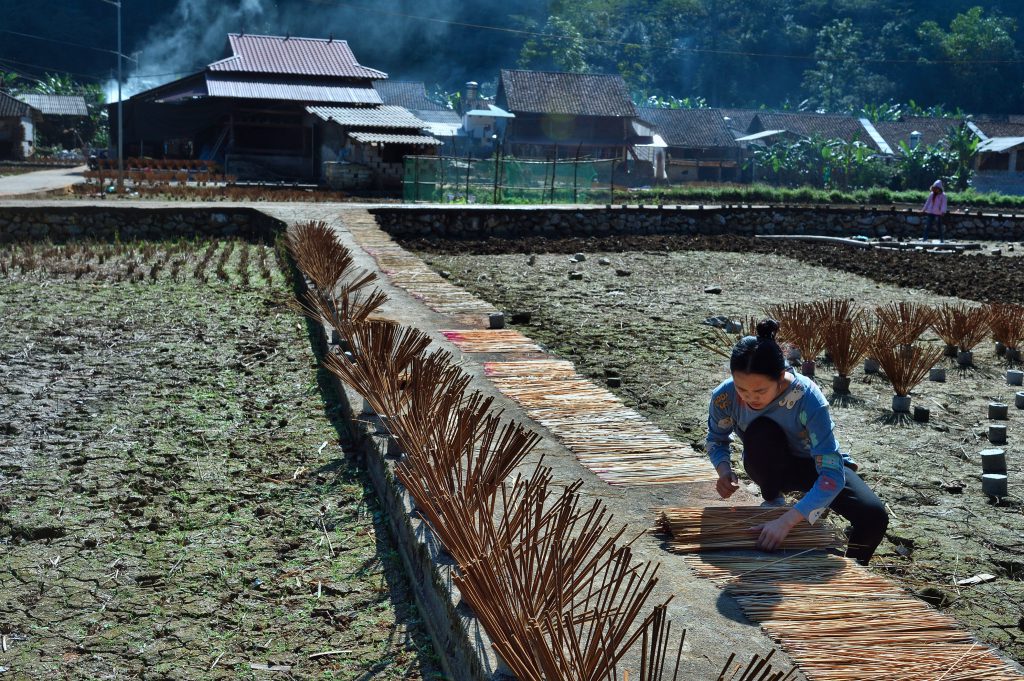
I stopped by a porch to speak with a white-haired elder who was drying finished incense sticks. They paused their work to chat eagerly. They said they didn’t know exactly when this traditional craft began but estimated it to be hundreds of years old. As a child, they had learned from their parents and grandparents how to whittle incense sticks, make incense powder, and bind it. All the ingredients for the incense are sourced from nature. Apricot branches are primarily used, cut into long segments, split, and finely whittled into shiny incense sticks. The incense powder is made from the bark of red cotton trees, pine wood, sawdust, and leaves of Bau Hat trees, which are found in the forest. These leaves help to bind all of the ingredients.
The bark and leaves are dried, crumbled, ground into a powder, and mixed with sawdust and the binding agent. The sticks are dipped up to four times in this mixture, with the bases dyed red. They are dried to produce the final product. Drying the incense depends heavily on the weather, so the villagers always hope for sunny and dry days, on which it takes only one day to dry a batch. If the weather is overcast, it can take three or four days to thoroughly dry the incense.
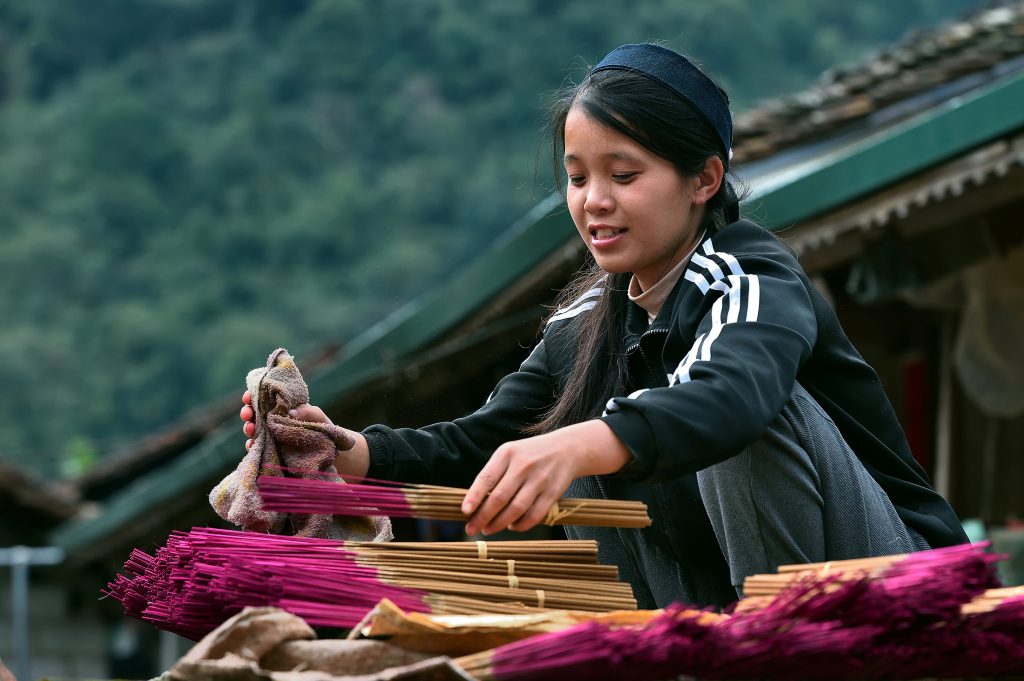
Visitors who come to Phia Thap village before Tet can enjoy tranquil scenes of wooden houses and learn about this traditional craft alongside local Nung people. The process of making incense may seem simple, but it requires skill and concentration. The locals teach tourists how to whittle incense sticks and dip them in powder to ensure a beautiful and even coating. Upon seeing the natural ingredients and handmade techniques, visitors feel confident about buying bundles of incense for their own use or as gifts.
The incense-making craft in Phia Thap is preserved by Nung people who wish to continue the cultural traditions of their ancestors. Moreover, using readily-available natural resources, the locals only need to work diligently and with focus to earn a stable income. As well as aiding their household economy, this craft has turned their village into an attractive destination for visitors drawn by Cao Bang’s beautiful landscapes.