Advertising



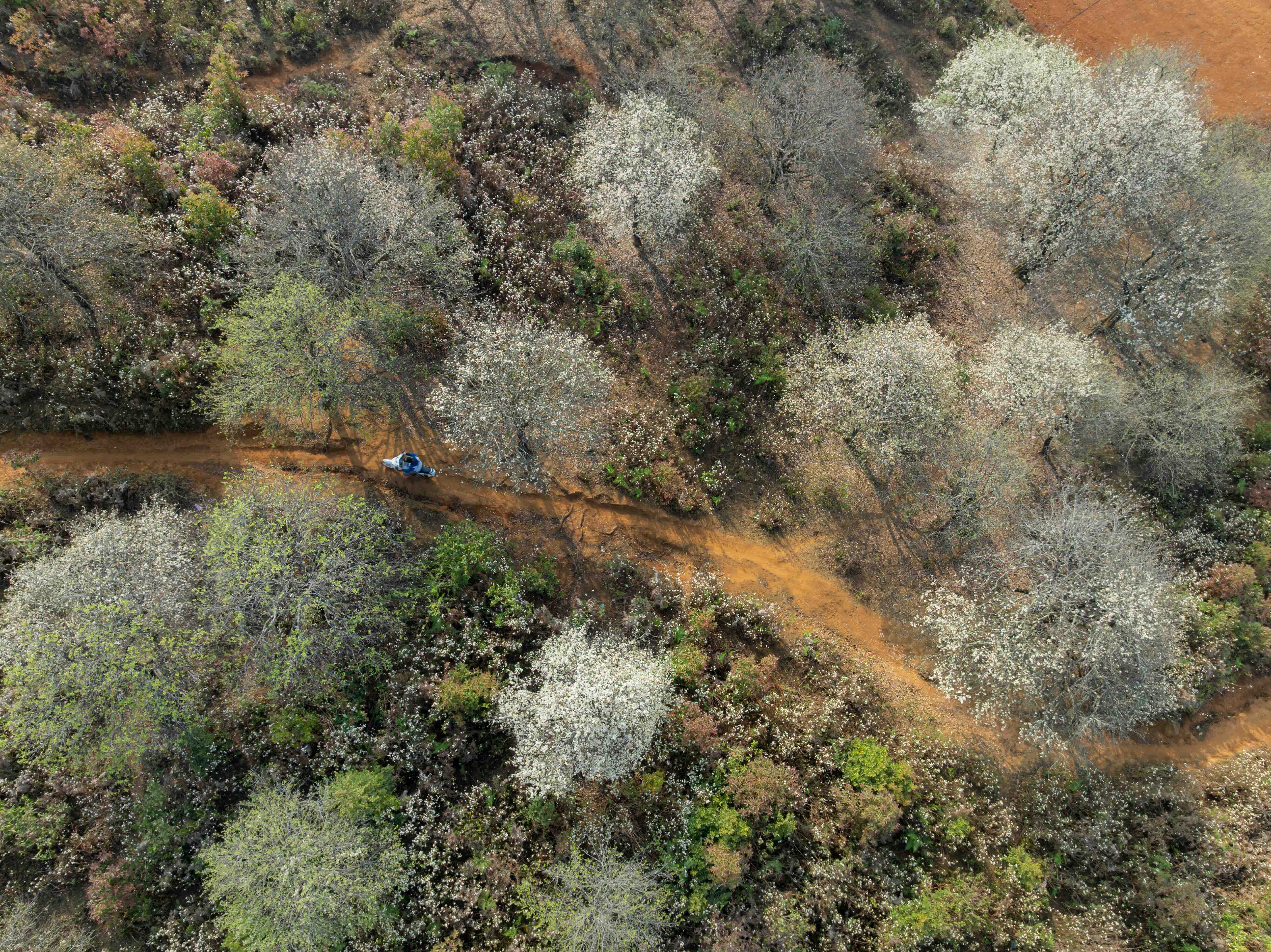
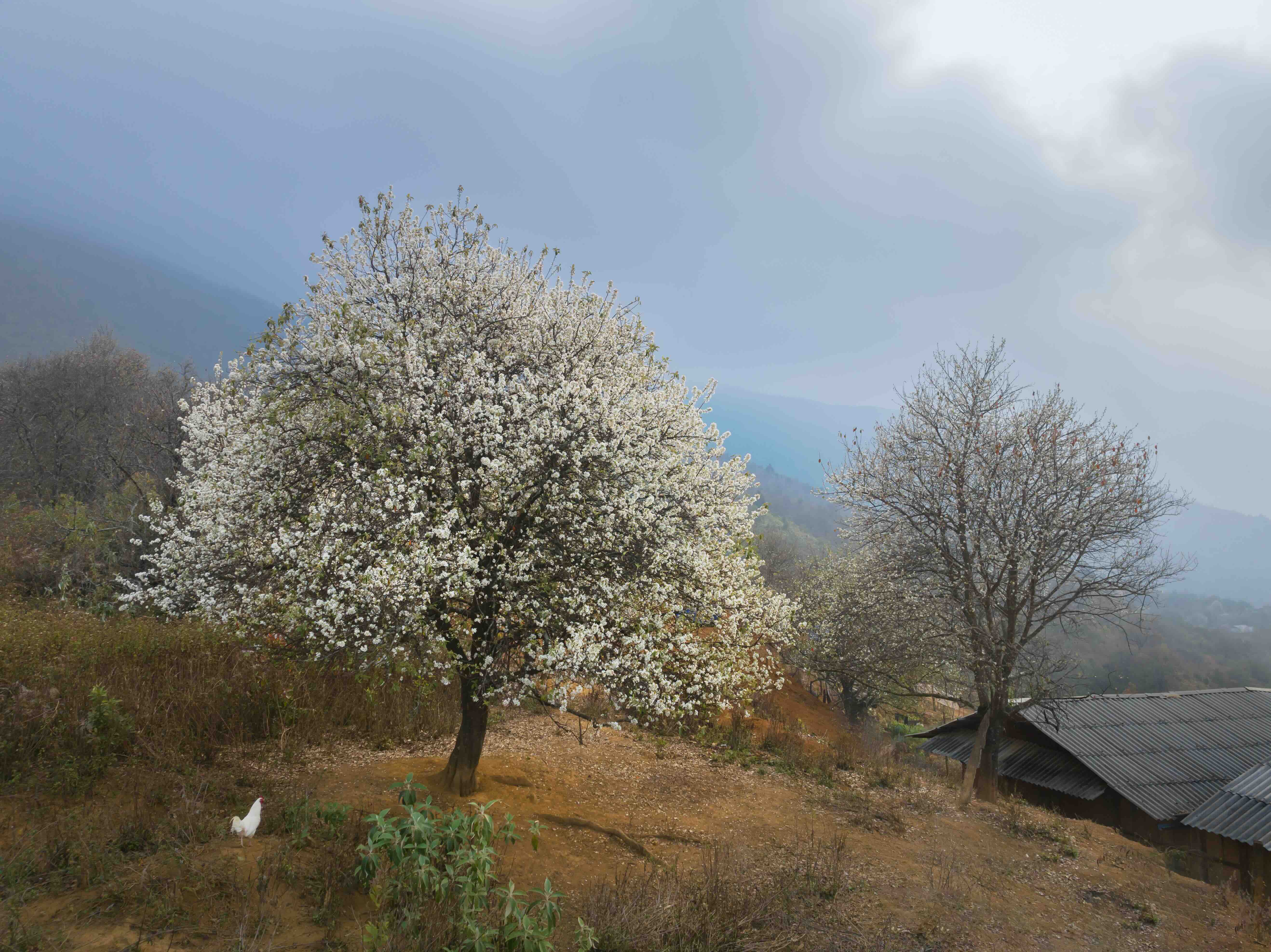
Unlike the plum plantations on lower slopes, planted in neat, orderly rows and also blooming white, the tao meo forest is made up of ancient trees that have stood for centuries. From towering, time-worn trunks – bark rough, cracked, and thick with moss, as if their lifeblood had long since drained away – tens of thousands of blossoms still burst forth with astonishing vitality, creating a beauty born of contrast. Tao meo flowers carry a quiet resilience: thick petals, warm golden stamens, and a gentle fragrance, blooming in dense clusters that cling to branches rising straight into the blue sky. From a distance, the massive trunks stand like guardian spirits of the old forest, watching over the village through countless generations. As the afternoon fades, mountain winds strengthen, sending petals swirling through the air before gently drifting onto the moss-covered roofs of ancient po mu wooden houses.
That night, I stayed in a small house perched on a hillside, secluded from the rest of the village, with an ancient tao meo tree standing at its doorstep. There were no car horns, no dust or smoke – only the soft clinking of cowbells drifting across the slopes, mingled with children’s laughter. On the breeze came a faint floral scent, blended with the smoky warmth of kitchen fires, seeping through the cracks of the po mu wooden walls. It was a fragrance I could only call the scent of peace.
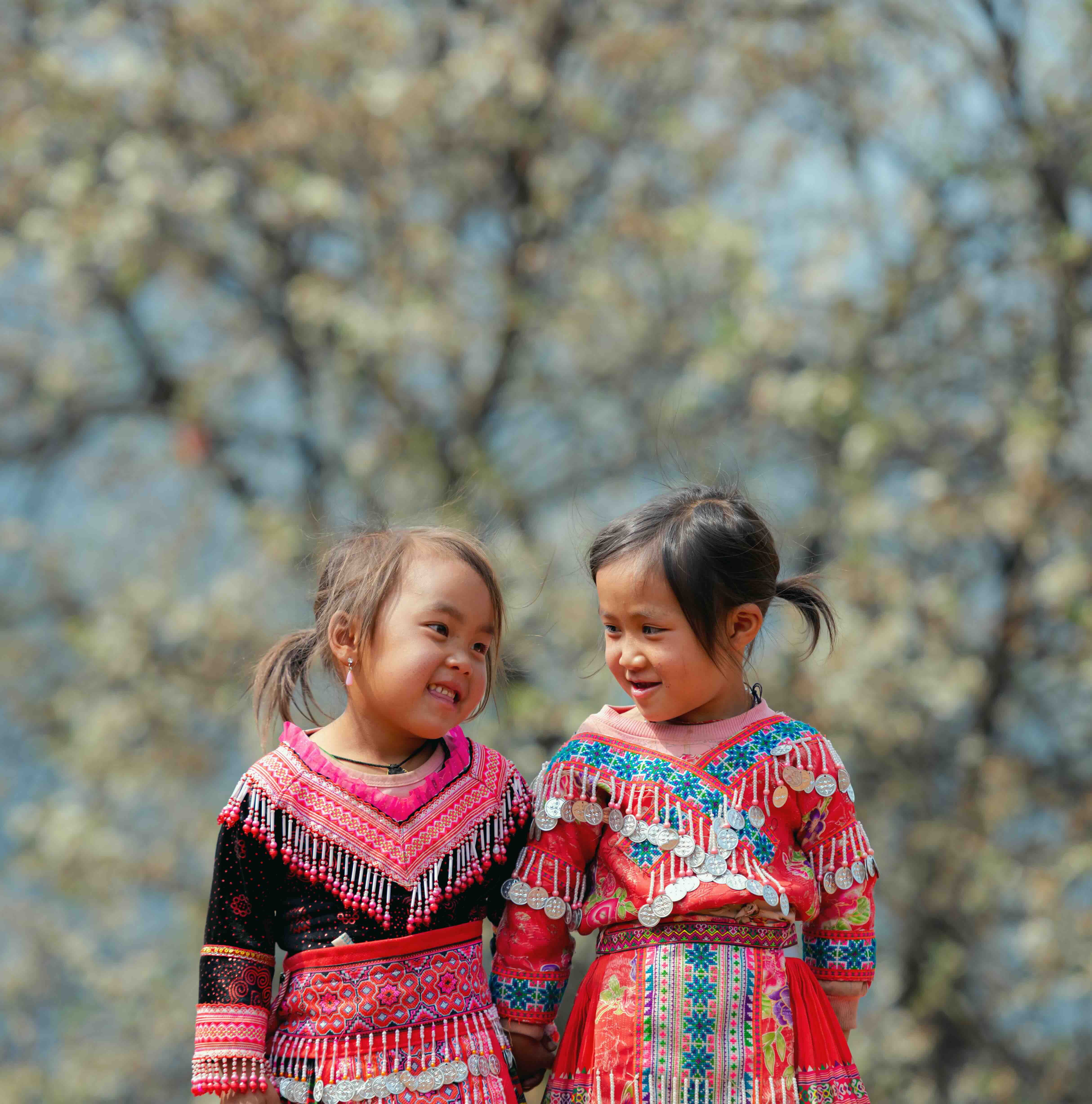
By the flickering fire, with a pot of hot tea between us, A Vang, my host, gestured toward the hillside and said, “My grandfather told me that even when he was a child, the tree already stood taller than him. We Black Hmong are born beneath apple trees, grow up climbing them to harvest fruit, and when we die, all we wish is to lie down and listen to the wind passing through the apple forest.”
In that moment, I understood that the tao meo tree is not only admired for its blossoms or valued for its fruit. It is a symbol of an unbreakable bond, the soul of this land. Trees and people are born and grow together among these rocky mountains, shaped by hardship yet carrying a strength that is pure, humble, and enduring. Lost in these thoughts, I drifted into sleep, lulled by the wind rustling through the flowering canopy, feeling as though I were floating among hills white as clouds.
The next morning, heading home, I turned back for one final look at the sea of blossoms. The white petals shimmering in early light made me feel as though I had just stepped out of a dream. Yet I knew my quiet impressions of this fairytale land would stay with me.
The 10-kilometer road to the village was recently paved with concrete, making the once arduous journey much easier. If city life ever leaves you feeling adrift in noise and haste, drive against the wind and make your way to Nam Nghiep. Sit beneath ancient trees and listen to the mountain breeze as it tells timeless stories. Let your heart grow light, like falling petals. And discover the radiant beauty that waits patiently to bloom from weathered trunks – a quiet reflection on life, offered by nature.